Khidrian Liminality at the edge of the world: Spiritual Impressions from the Maghreb
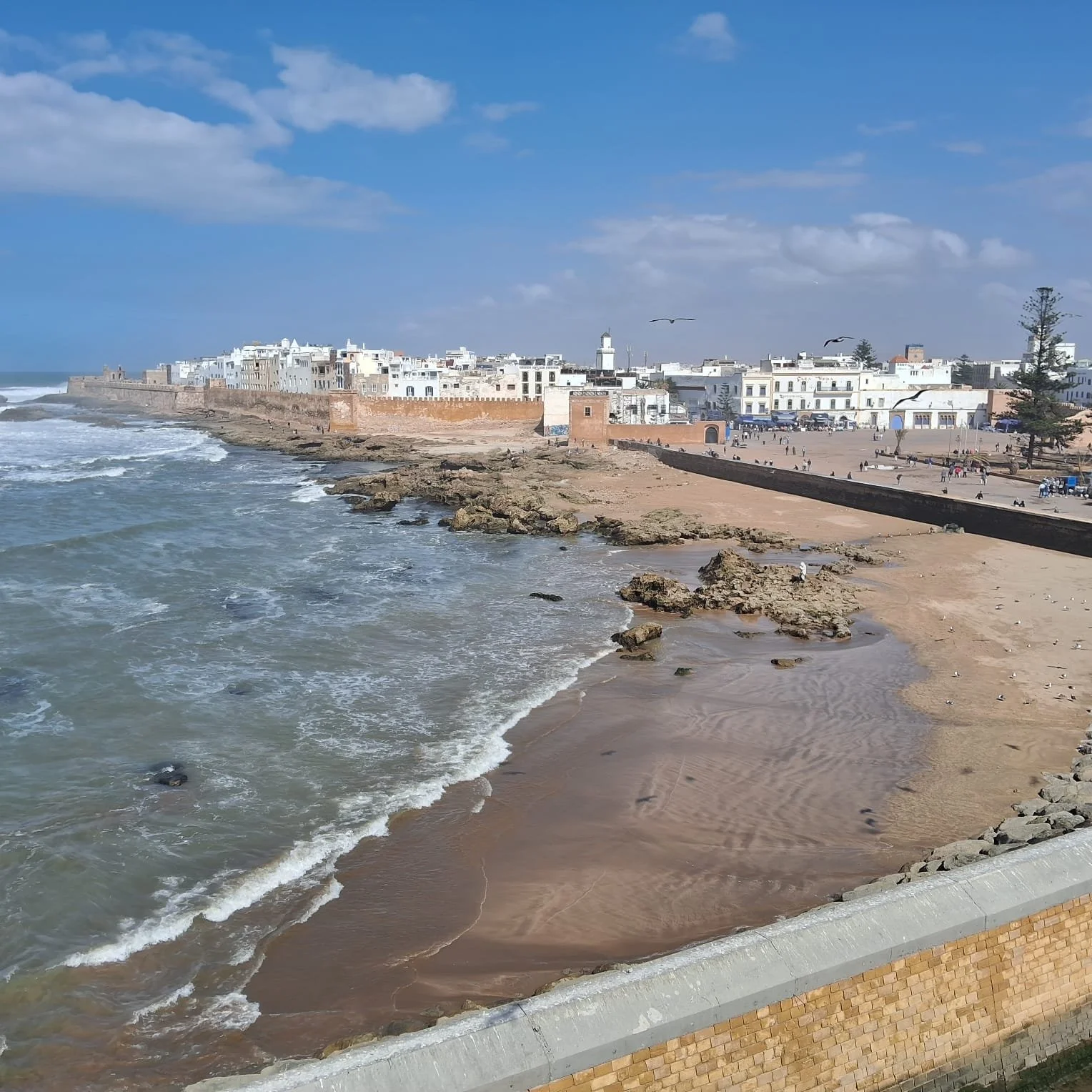
Nestled up on the edge of the wild Atlantic, the port city of Essaouira retains echoes of the hidden zawiyas and ancient shrines that dot the region. The coast breathes and pulsates with the breath of God.
It is the wind you feel first. Cool, sweeping gusts that slap you awake, into presence. Next, you hear the waves. Steady, rhythmic, churning walls of water that rise and break across the crumbling stone ramparts. Parched and weather-beaten, the stoic battlements and fading masonry alike bear witness to an eternal Source, beyond time and beyond memory.
The Sufi mystic Jalaladdin Rumi described the human ego (nafs) as a drop of water in the ocean. While each drop fears dissolution within the vast, endless expanse of Being, the mystic reminds us that each drop is but a reflection of a deeper Reality. Throughout the centuries, seekers, monks, mystics, and madmen wandered the coast, yearning to reconnect with this single, primordial Truth and to dissolve within al bahr at-tawhid, “the ocean of Oneness.” While nations, fiefdoms, and empires inevitably crumble much akin to the steady erosion of Essaouira’s faded ramparts, the desire to know God has always led through pillared halls and stone forests, monuments of man’s quest for eternity. The Quran describes the empty courts of vanished kings, the monuments to long-forgotten ambitions. Hewn cities meant to stand eternally:
“Have you not seen how your Lord dealt with ʿĀd?
With Iram of the lofty pillars,
the like of which had never been created in the lands?
And Thamūd, who carved the rocks in the valley?
And Pharaoh, owner of the stakes?
Those who transgressed throughout the lands,
and spread much corruption therein.
So your Lord poured upon them a scourge of punishment.
Indeed, your Lord is ever watchful.” (from Surat Al-Fajr, the Quran)
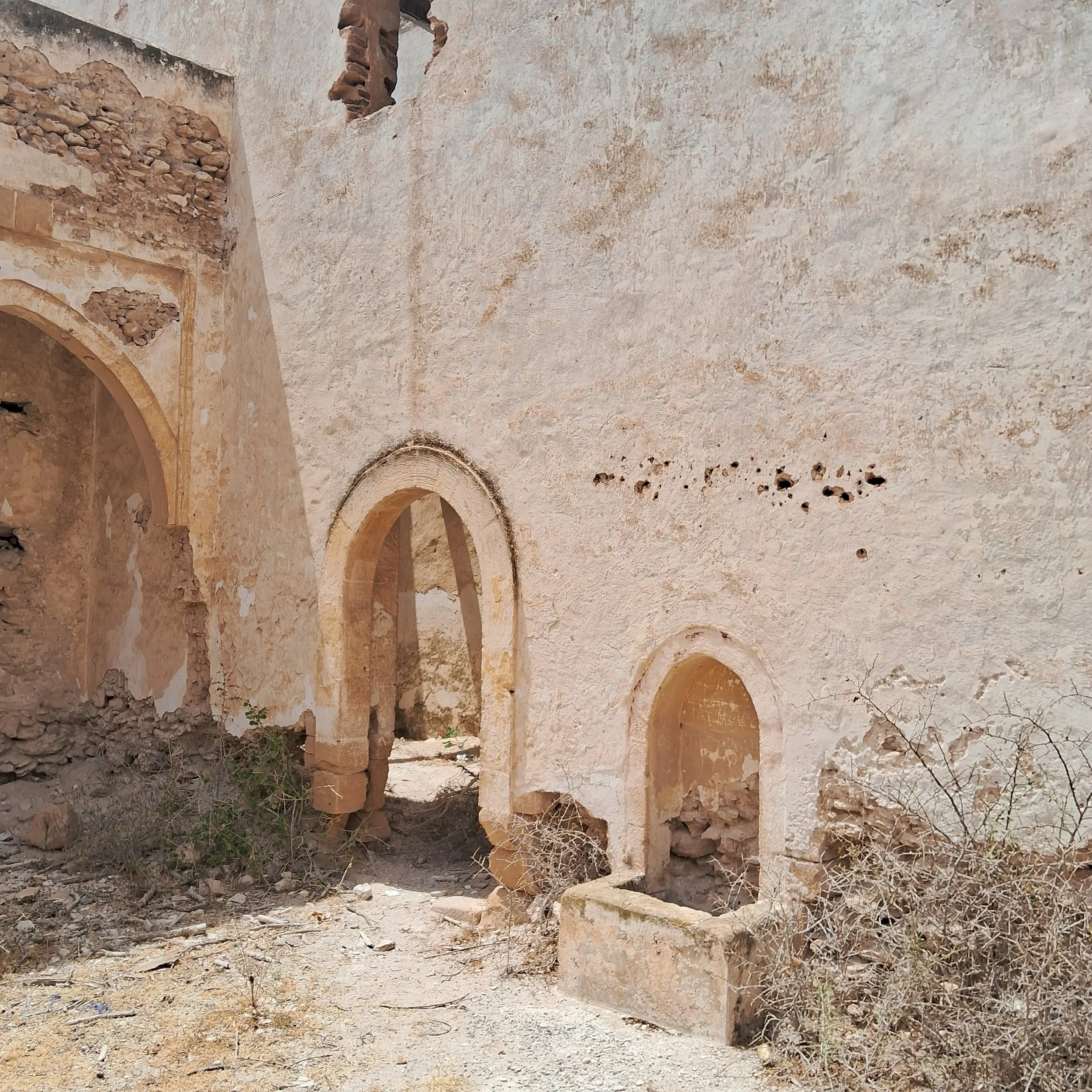
A faded stone archway and ablution niche in a ruined and overgrown courtyard. Filled with brambles and riddled with weeds, the remnants of ‘Alawi sultan Mohammad ben Abdullah’s court bear silent witness to the inexorable march of time and the transition of all created things.
Located on a stark promontory overlooking the ocean and partially swallowed by shifting sands and overgrown with vegetation, the palace of a forgotten ruler stands sentinel, a watchful relic of a vanished past. The sultan, Muhammad ben Abdullah, was patron of Essaouira and was responsible for the development of the port city as a window unto Europe, Africa, and the Americans during the 18th century. In the tumultuous years following the death of the sultan Moulay Ismail, the new sultan Muhammad ben Abdullah invited the French architect Theodore Cornut to help design the city’s fortifications. Through the steady influx of wealth from the trade in sugar, salt, and other commodities, Essaouira became a meeting point for merchants as well as pilgrims and wayfarers, many of whom were the Jewish descendants of exiles from the time of the 15th century Moorish expulsions from Spain.
Essaouira, though sunbaked and worn out in the harsh summer months, became a bustling hub of guilds and followers of various faith traditions. It was a true palimpsest upon which layers of culture and civilization—Amazigh Berber wanderers from the mountain valleys, Jewish merchants and mystics, Arab traders, and European engineers rubbed shoulders. In particular, Jewish merchants bustled through the city’s crowded streets, at one point reaching nearly half of the population. These prominent families—referred to as tujjar-as-sultan, or “Merchants of the Sultan”, played an important role in expanding Moroccan trade contact with the wider world and truly embodied a multi-lingual, liminal identity.
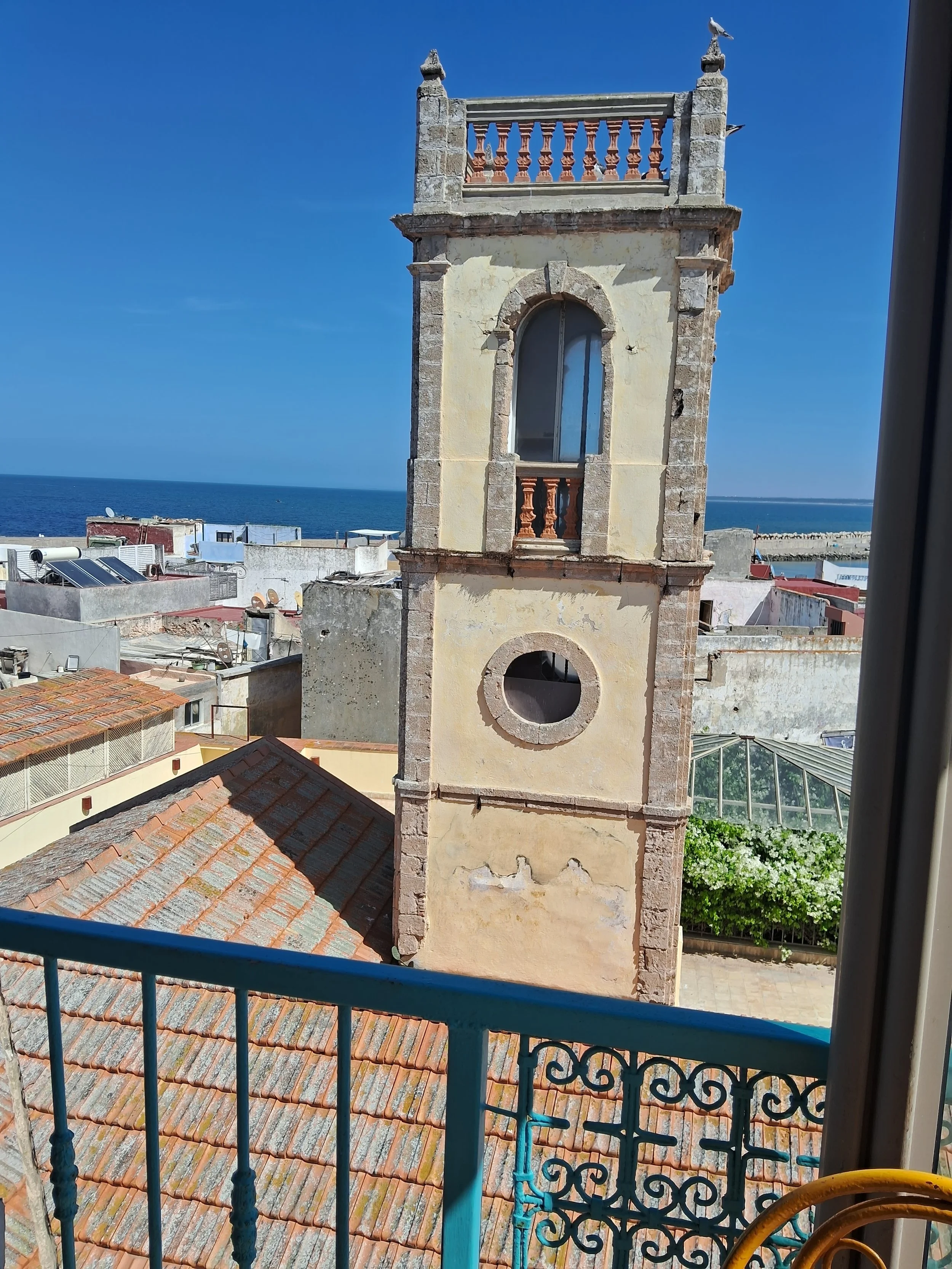
Moroccan cities that dot the coast bear traces of this layered history. Above, the weathered tower of an old Portuguese church greets the dawn in the Atlantic coastal port of El Jadida (formerly, the Portuguese trading town of Mazagan).
Today, wandering the crumbling backstreets of the mellah, or “Jewish old town,” one still stumbles across traces (in Arabic, “athar”) of this long history of overlapping civilizations, shared laughter, tears, and friendship. The Moroccan-Jewish writer Edmond Amran El Maleh, famously described, “...all these graves which, exposed to the rank growth, the wind, and the ravages of the ocean, silently enclose the Hebrew inscriptions and mysterious symbols...". One still hears the whispers, feels the breath of the past. El Maleh chose to be buried in Essaouira, a place that contained for him what can be called in Arabic ayah, or “signs.” A collection of old, yellowed photographs. Dusty, book-laden shelves upon a crumbling wall. A broken tombstone, its engraved Hebrew letters often barely legible under a cover of dust. The refreshing, vertical spray of the ocean waves as they strike the ramparts.
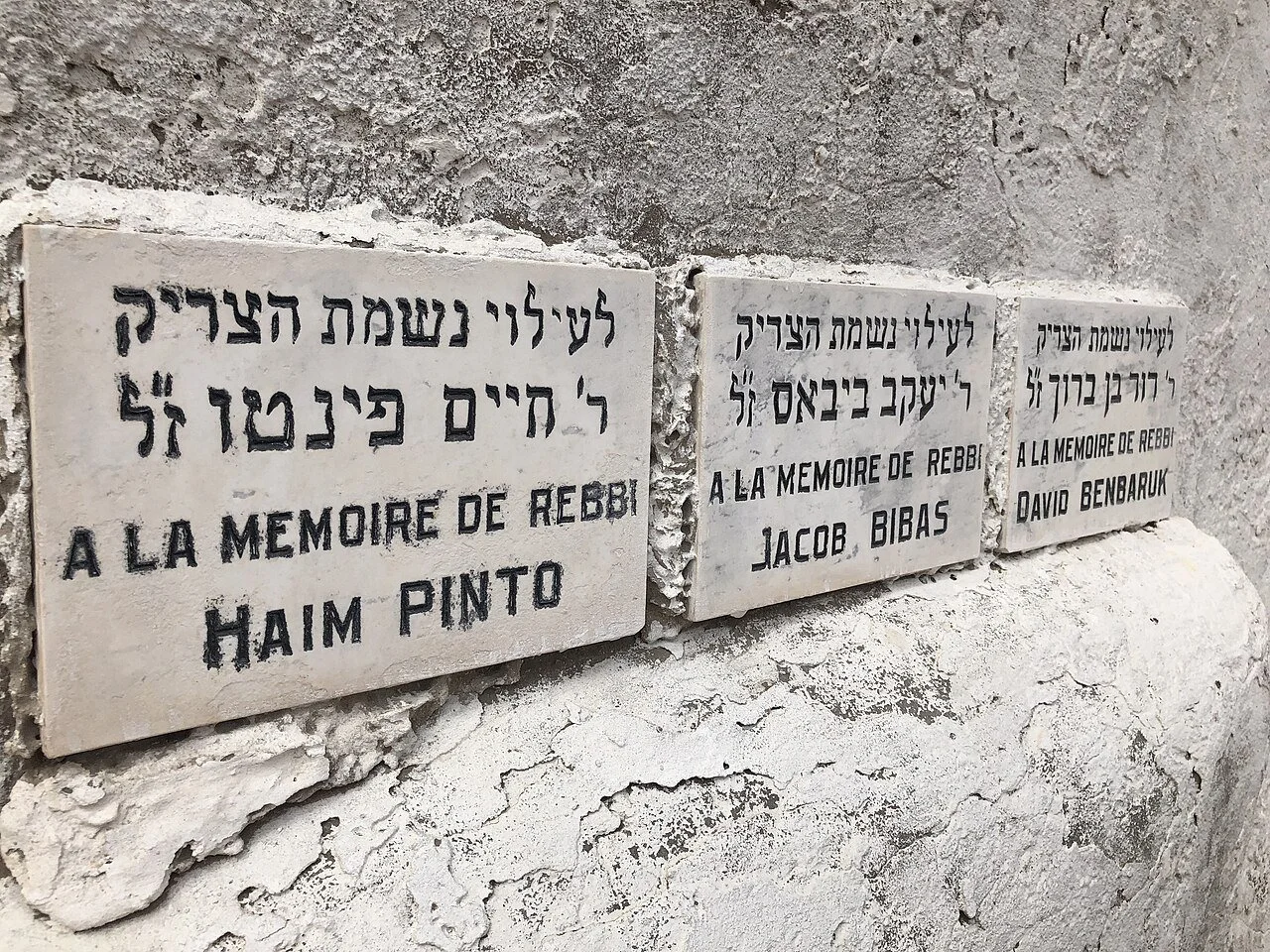
Witnesses of a passing age, yet etched in memory. Polished plaques rest as athar, "traces” that reflect centuries of prayer and contemplation
Despite living most of his life in France, El Maleh considered himself thoroughly and irrevocably Moroccan, and chose as his final resting place this threshold barrier between sea and land. The concept of the barzakh, which meets at the majma’ al-bahrayn (“the meeting of the two seas”) is a threshold, a portal that connects and divides. Essaouira stands at the heart of this ancient mystery, and evokes a long-forgotten yet echoing conversation between sand and sea, rock and wave. While the heaving Atlantic never sits still, and waves break and then vanish, Essaouira remains as a symbol of the fleeting and the abiding. The barzakh is the thinning of the veil between this world and the next, an intermediate zone that one can imbibe and feel as one strolls along the ramparts, breathing in the fragrant sea air.
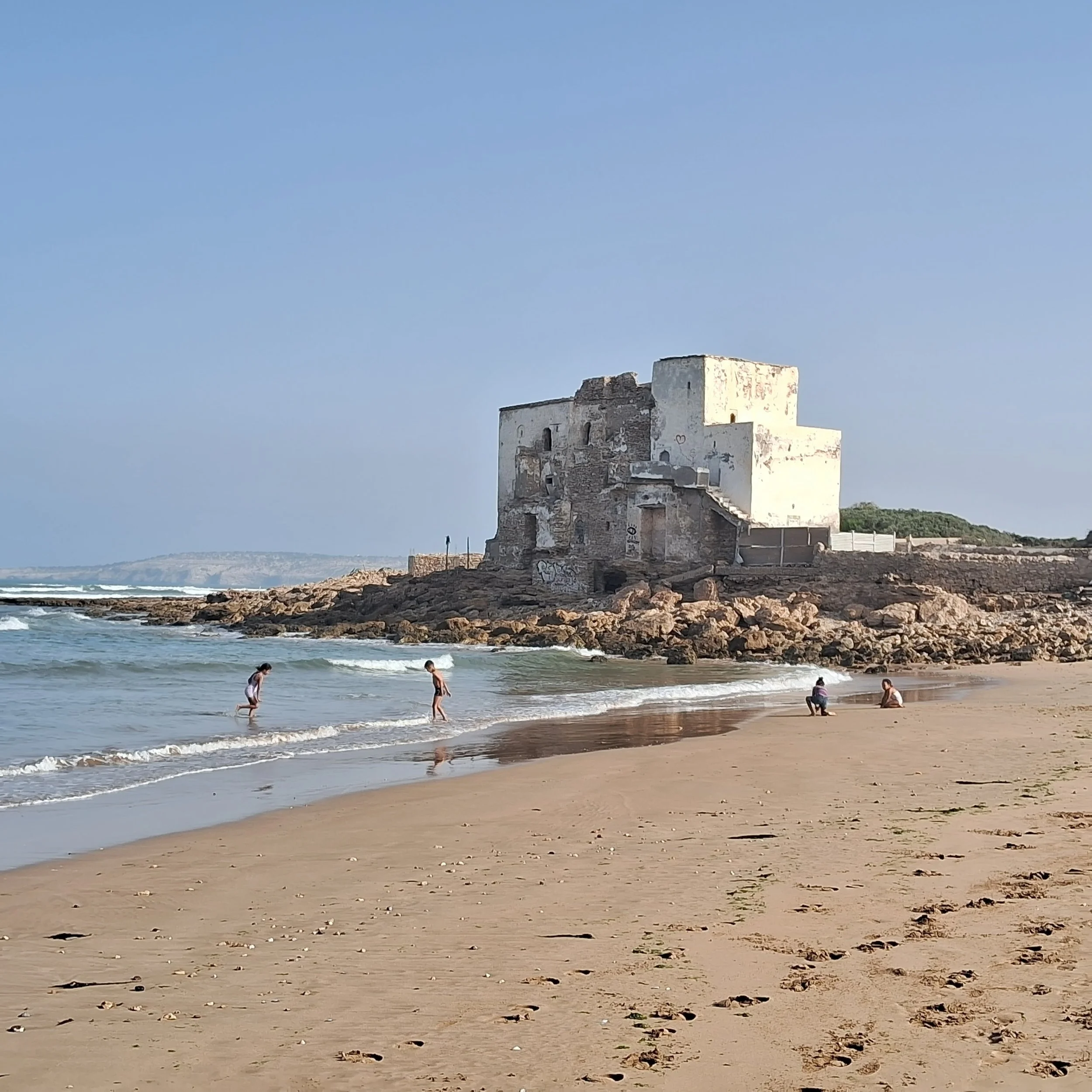
At a beach in nearby Sidi Kaouki, children play among the weathered remains of an old zāwiya. Standing upon the threshold of the Atlantic, these coastal sanctuaries embody the spirit of the barzakh—places where earth meets sea, memory meets hope, and the visible world grows translucent to the unseen. Though many now lie in ruin, they continue to bear witness to centuries of pilgrimage, where blessings were sought for mothers and newborns, prayers were offered for the departed, and the rhythms of ordinary life were gently entrusted to the mercy of God.
AL KHIDR
In the Quranic imagination, Al Khidr is the guide that one encounters in such threshold spaces. His name, reminiscent of the word khadra, or “green,” evokes vegetation, renewal, freshness, and the gardens of paradise replete with fountains bubbling up with life-giving water. Like the green sprouts of grass and solitary splashes of flowers that push up, assiduously, between the cobblestone cracks, Al Khidr reminds us of the constant cycle of life and the hidden secrets that lay guarded behind the evident.
The mysterious figure of Al Khidr appears in Surat Al-Kahf, where he reveals himself to the Prophet Musa (Moses):
وَإِذْ قَالَ مُوسَىٰ لِفَتَاهُ لَا أَبْرَحُ حَتَّىٰ أَبْلُغَ مَجْمَعَ الْبَحْرَيْنِ أَوْ أَمْضِيَ حُقُبًا
Wa idh qāla Mūsā li-fatāhu lā abraḥu ḥattā ablugha majmaʿa al-baḥrayni aw amḍiya ḥuqubā.
"Moses said to his servant: 'I will not cease until I reach the meeting of the two seas, even if I must journey for ages.'"
(18:60)
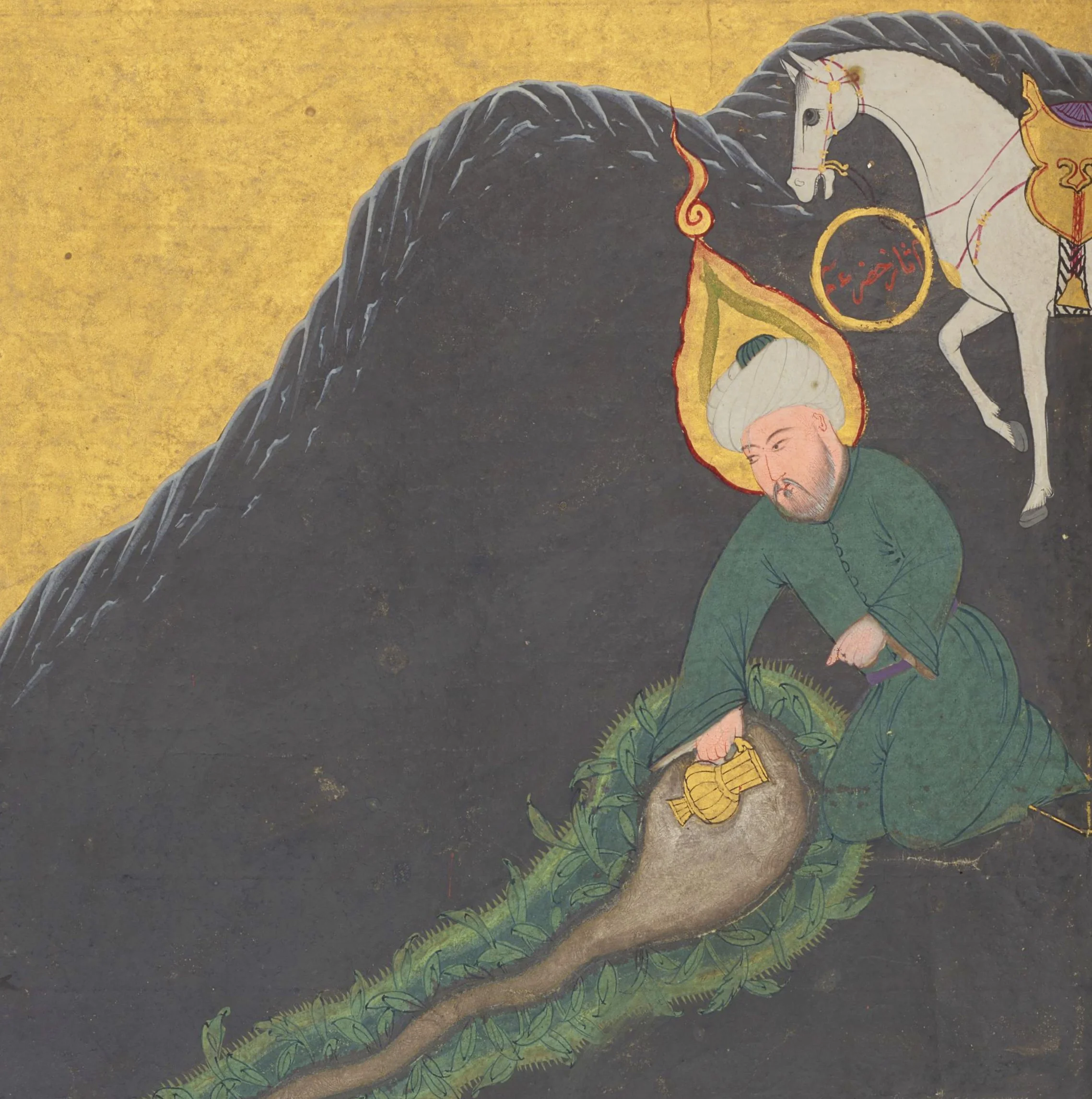
Often described as an angel, or wali (saint), Al Khidr appears in the Quranic Surat al-Kahf (Surat of the Cave), revealing himself to the Prophet Musa (Moses). Appearing in guise after guise, age after age, Al Khidr represents an archetype of timeless wisdom unveiling itself precisely when human reason remains insufficient to fathom deeper truths.
(above) Al Khidr fills his cup from the bubbling fountain of life (from an Ottoman era miniature 1585-90).
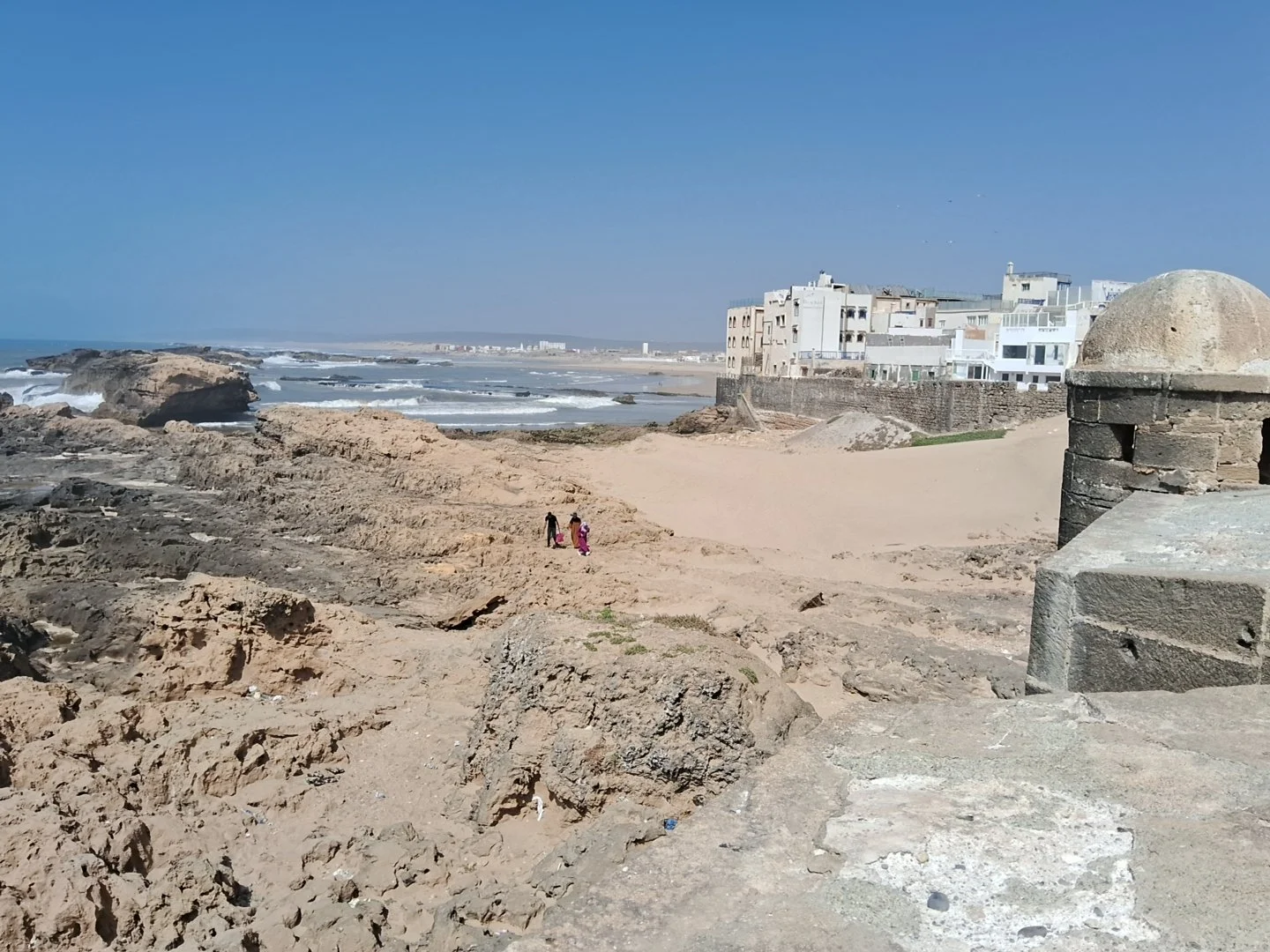
A family wanders amidst the rock outcroppings beyond the city ramparts, where sea urchins and clams can be harvested.
In Quranic symbolism, the meeting of the two seas—majma’ al-bahrayn—indicates a completion of knowledge, a synthesis of the outward (zahir) and inner (batin), the reason and unveiling, the manifest and the hidden. It represents a confluence of history and wisdom. While the Prophet Musa represents revelation and the establishment of law, Al Khidr’s appearance hints towards deeper, hidden truths that lay obscured amid the ruins and craggy, cliff faces of the sea, the eternal coast of the Maghrebi imagination.
Al Khidr appears before the Prophet Musa as a manifestation of rahma (mercy), as the latter must detach from all outward knowledge (‘ilm, in Arabic) to imagine and conceive of deeper truths. The Prophet seems ready, yet Al Khidr gives him a warning:
إِنَّكَ لَن تَسْتَطِيعَ مَعِيَ صَبْرًا وَكَيْفَ تَصْبِرُ عَلَىٰ مَا لَمْ تُحِطْ بِهِ خُبْرًا
Innaka lan tastaṭīʿa maʿiya ṣabrā. Wa kayfa taṣbiru ʿalā mā lam tuḥiṭ bihi khubrā.
"Indeed, you will not be able to remain patient with me. And how could you be patient regarding that which you do not fully comprehend?"
(18:67–68)
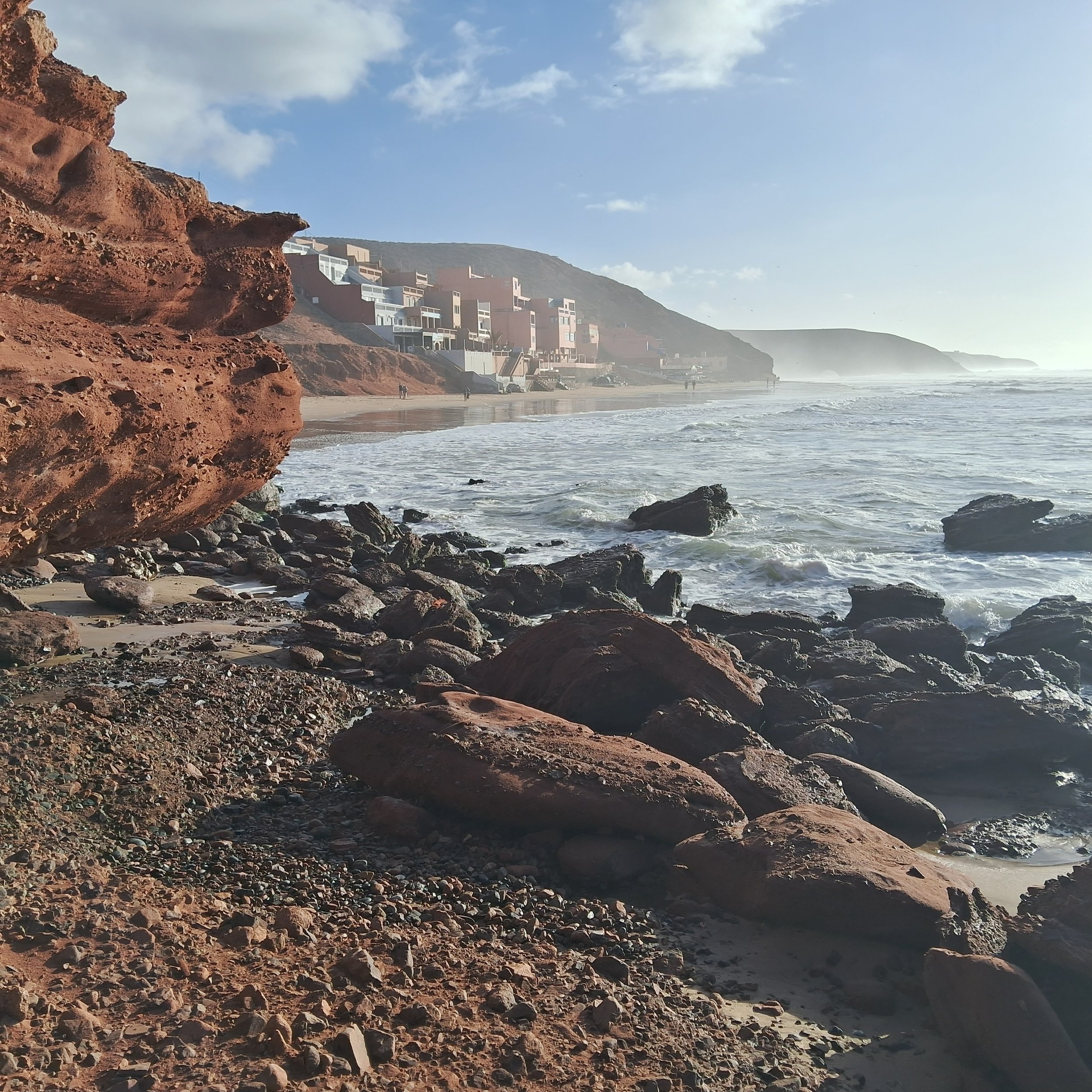
At Legzira, where land meets sea. Outcroppings and sandy cliffs collapse into the ocean while seeming to buttress the very sky. Churning waves swell up among the rocks, frothing amidst the stones, and receding. In the far-off mists, one can barely make out the arch, carved over millennia by wind and wave, a portal between worlds.
THE FISHERMAN’S BOAT
Al Khidr takes Musa alongside as the two journey along the coast. They first encounter fishermen at a lonesome outpost along the beach. The mysterious guide boards an old fishing boat with the Prophet and the two set out. Suddenly, Al Khidr pierces a hole through the hull of the salt-worn but seemingly sound vessel:
قَالَ أَخَرَقْتَهَا لِتُغْرِقَ أَهْلَهَا لَقَدْ جِئْتَ شَيْئًا إِمْرًا
Qāla akharaqtahā li-tughriqa ahlahā laqad ji'ta shay'an imrā.
He said, "Have you made a hole in it to drown its people? You have certainly done a grave thing."
— Qur'an 18:71
Al Khidr gently chides the Prophet, reminding him of his prior warning that the latter would not be able to remain patient with the mysterious guide’s baffling actions.
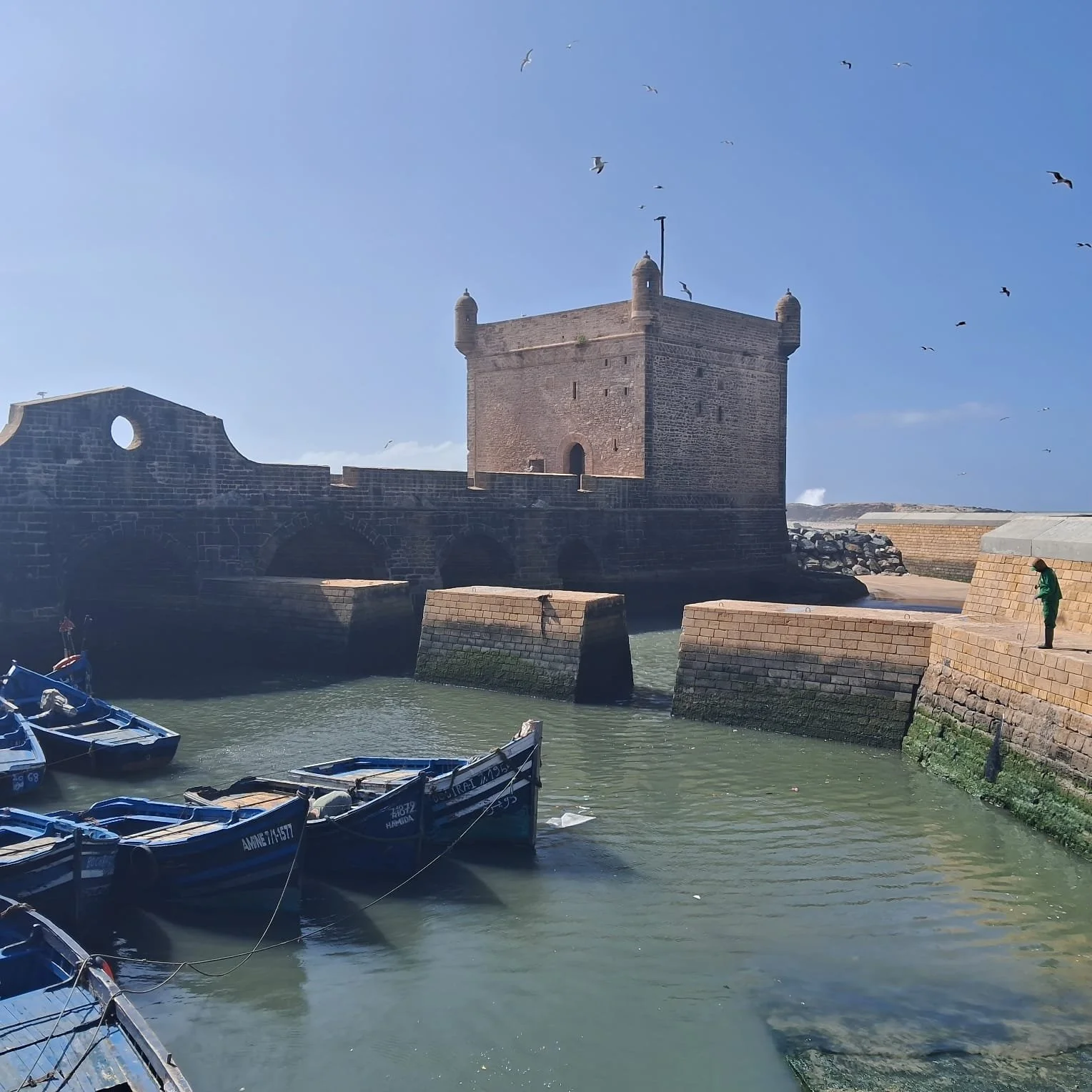
Within the harbor of Essaouira’s old town, brightly-painted fishing boats gently rock amid the current. A lone fisherman peers into the murky, green water in the shadow of the sqala, or “bastion” that towers over the port.
The weathered bastions of the Sqala invite the traveler into murāqabah—the Quranic discipline of spiritual watchfulness. Like Moses journeying with Al-Khiḍr, one learns that wisdom comes not from mastering the horizon but from quietly attending to the signs (āyāt) that emerge from it.
THE YOUNG BOY
The two continue upon their journey, when the mysterious wanderer and Musa come across a young boy. Al Khidr promptly kills him:
قَالَ أَقَتَلْتَ نَفْسًا زَكِيَّةً بِغَيْرِ نَفْسٍ لَّقَدْ جِئْتَ شَيْئًا نُّكْرًا
Qāla aqatalta nafsan zakiyyatan bighayri nafsin laqad ji'ta shay'an nukrā.
"He said, 'Have you killed a pure soul that had killed no one? You have certainly done a dreadful thing.'
— Qur'an 18:74
While the raw act of murder is shocking and morally abhorrent to the Prophet, Musa forges on with Al Khidr despite his misgivings and incomprehension.
THE VILLAGE WALL
Finally, the valiant pair reach a village. They approach the townspeople, whom they beseechingly petition for food. Then, having been unceremoniously brushed off, the duo stumble across a ruined wall, its stones haphazardly strewn amidst the parched landscape around it. Al Khidr gets to work and restores it:
Musa objects again, but this time for eminently practical reasons:
قَالَ لَوْ شِئْتَ لَاتَّخَذْتَ عَلَيْهِ أَجْرًا
Qāla law shi'ta lattakhadhta ʿalayhi ajrā.
"Moses said, 'Had you wished, you could certainly have taken payment for it.'"
— Qur'an 18:77
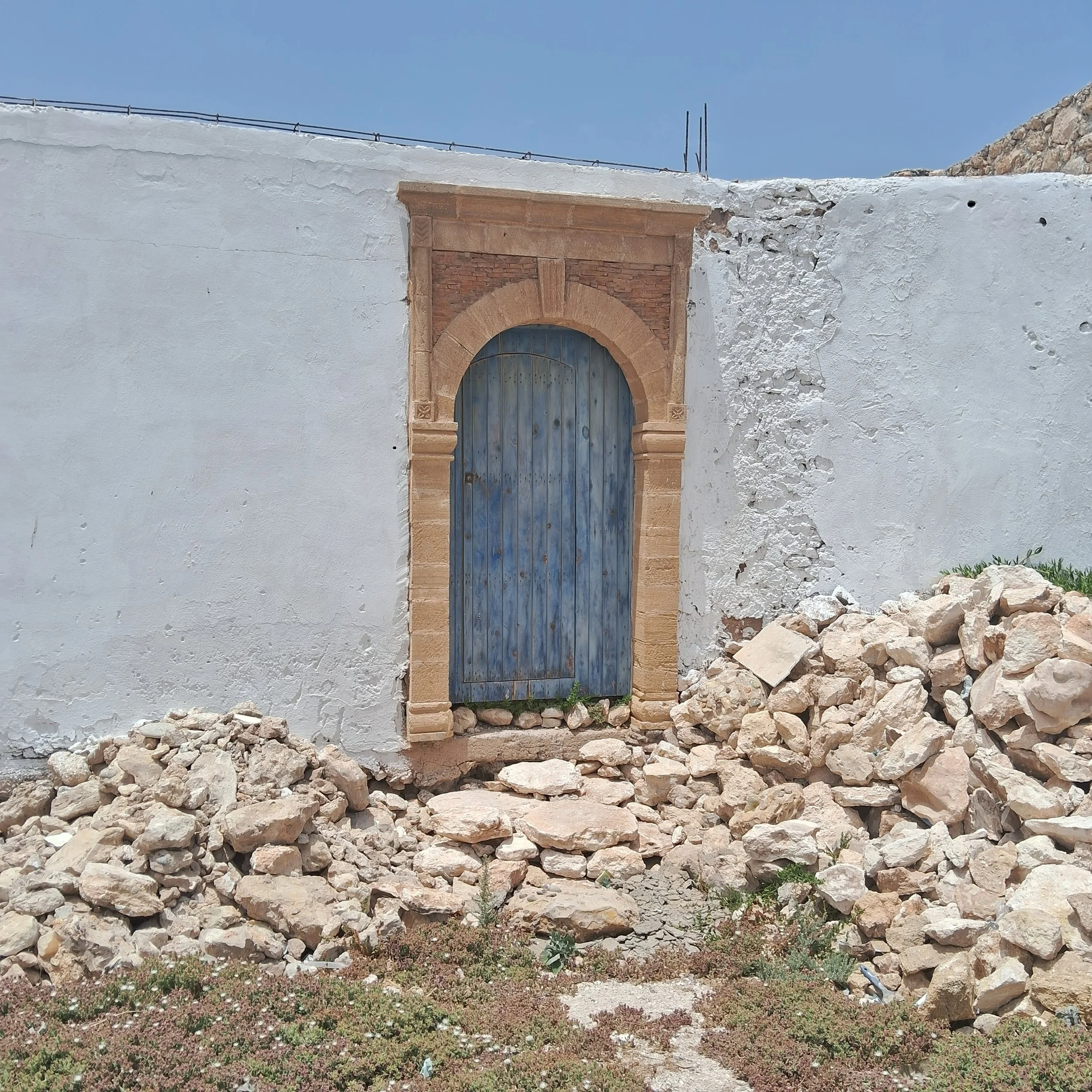
A freshly-painted door and white-washed enclosure laps in the sun. At the foot of the threshold, discarded stone and rubble.
Al KHIDR EXPLAINS THE STORY OF THE BOAT
The time comes, and Al Khidr explains his seemingly inscrutable behaviour:
وَأَمَّا السَّفِينَةُ فَكَانَتْ لِمَسَاكِينَ يَعْمَلُونَ فِي الْبَحْرِ فَأَرَدتُّ أَنْ أَعِيبَهَا وَكَانَ وَرَاءَهُم مَّلِكٌ يَأْخُذُ كُلَّ سَفِينَةٍ غَصْبًا
Wa ammā as-safīnatu fa-kānat li-masākīna yaʿmalūna fī al-baḥri fa-aradtu an aʿībahā wa kāna warā'ahum malikun ya'khudhu kulla safīnatin ghaṣbā.
"As for the boat, it belonged to poor people working at sea. I intended to damage it because behind them was a king seizing every sound ship by force."
— Qur'an 18:79
With this simple explanation, Al Khidr reveals how the defect that so troubled Musa became the very salvation of the vessel itself. The boring of the hole, far from an act of destruction, becomes instead an act of preservation. The idea echoes the thoughts of Rumi:
“The wound is the place where the light enters you.”
As well as the famous New Testament verse:
"For whoever would save his life will lose it, but whoever loses his life for my sake will find it."
— Gospel of Matthew 16:25
In life, every instinct leans towards protection, towards self-preservation, towards conversation. Human beings are by nature grasping and clinging. Yet Khidr, and Christ, propose the opposite. By leaning into hardship, we open a space for trust, and ultimately, a space for the mercy of God to reach us. It is through the sacrifice itself that mercy is shown unto mankind.
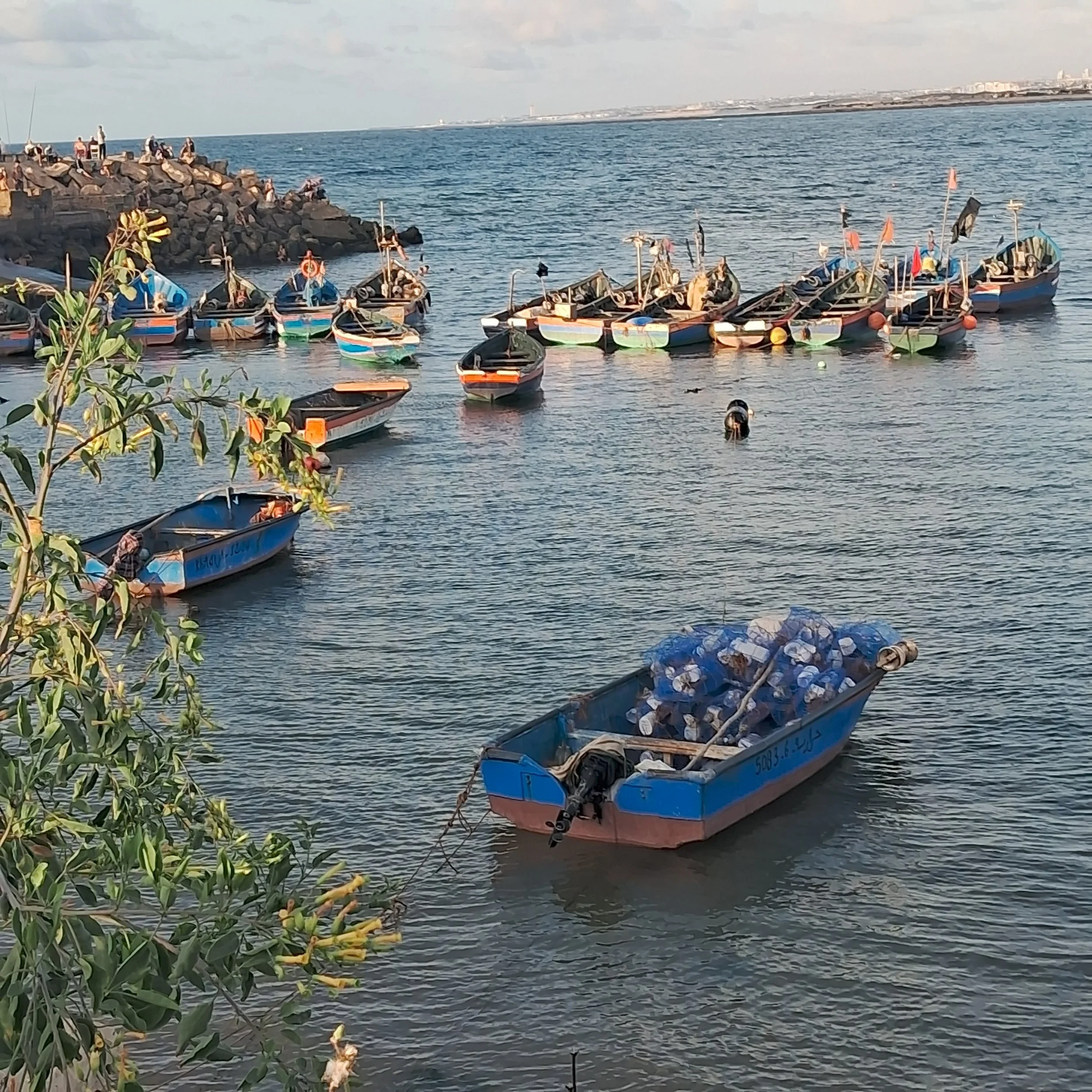
Khidrian parallels can be found throughout the sacred texts, most notably the analogy of a boat cast upon a stormy sea.
As the disciples crossed the Sea of Galilee, a violent storm overwhelmed their small boat while Christ slept. Terrified, they cried, "Lord, save us! We are perishing!" He replied, "Why are you afraid, O you of little faith?" Then He rebuked the winds and the sea, "and there was a great calm" (Matthew 8:23–27).
Like Moses travelling with Al Khidr, the disciples of Christ mistake the storms of the ocean for the entire story of life. Yet, beneath the churning waves and violent spray of the sea, lies deep calm.
THE KILLING OF THE BOY
Al Khidr’s explanation for the second incident likewise indicates the hidden mercy obscured beneath an outwardly manifest act of cruelty:
وَأَمَّا الْغُلَامُ فَكَانَ أَبَوَاهُ مُؤْمِنَيْنِ فَخَشِينَا أَن يُرْهِقَهُمَا طُغْيَانًا وَكُفْرًا
Wa ammā al-ghulāmu fa-kāna abawāhu mu'minayn fa-khashīnā an yurhiqahumā ṭughyānan wa kufrā.
"As for the boy, his parents were believers, and we feared that he would overwhelm them with rebellion and disbelief."
— Qur'an 18:80
Then:
فَأَرَدْنَا أَن يُبْدِلَهُمَا رَبُّهُمَا خَيْرًا مِّنْهُ زَكَاةً وَأَقْرَبَ رُحْمًا
Fa-aradnā an yubdilahumā rabbuhumā khayran minhu zakātan wa aqraba ruḥmā.
"So we intended that their Lord should replace him with one better than him in purity and nearer in affection."
— Qur'an 18:81
In life, people are often struck by the incomprehensible. The loss of a child, sudden outbreaks of violence, deportation and exile. The human instinct is naturally to bewail, to blame God, or to throw one’s hands up in resignation. Moses’ reaction to the abrupt slaying of the boy by Al Khidr reflects the former’s utter befuddlement, as he exclaims: laqad ji'ta shay'an nukrā, “you have certainly done a dreadful thing.” The root ن ك ر (n-k-r) in Arabic is particularly powerful, and encapsulates something unrecognizable, morally abhorrent, and reflects the absolute end of the tether for the Prophet, whose moral sensibility has been thoroughly shaken.
Yet, Khidr draws our attention to the good that can seemingly emerge from external evils. Certain examples, such as the outburst of solidarity, mercy, courage, and strength that have emerged during wartime, serve as key reminders of the potential goodness of the human spirit. Thus while the story itself arouses a sense of indignation, certain forms of violence—the kind seen during warfare, the movement of peoples and clashing of tribes—allows for the emergence of steadfastness, bravery, and other virtues.
REBUILDING THE WALL
وَأَمَّا الْجِدَارُ فَكَانَ لِغُلَامَيْنِ يَتِيمَيْنِ فِي الْمَدِينَةِ وَكَانَ تَحْتَهُ كَنزٌ لَّهُمَا وَكَانَ أَبُوهُمَا صَالِحًا
Wa ammā al-jidāru fa-kāna li-ghulāmayni yatīmayni fī al-madīnati wa kāna taḥtahu kanzun lahumā wa kāna abūhumā ṣāliḥā.
"As for the wall, it belonged to two orphan boys in the city, and beneath it was a treasure belonging to them. Their father had been righteous."
— Qur'an 18:82
فَأَرَادَ رَبُّكَ أَن يَبْلُغَا أَشُدَّهُمَا وَيَسْتَخْرِجَا كَنزَهُمَا رَحْمَةً مِّن رَّبِّكَ
Fa-arāda rabbuka an yablughā ashuddahumā wa yastakhrijā kanzahumā raḥmatan min rabbik.
"Your Lord intended that they should reach maturity and then bring forth their treasure as a mercy from your Lord."
— Qur'an 18:82
The third and final story describes how Khidr and the Prophet Musa set to work repairing a wall amid the stares of unwelcoming villagers. While the Prophet Musa objects in incomprehension, the story teaches that great treasure can be hidden among apparent ruins. Indeed, much of what we encounter in the waking world serve as ayah (signs) and athar (traces) that point towards a greater reward (in Arabic, al-ajrun ghayru mamnun, or “an unending recompense”). Through the story of the wall, Al Khidr teaches us the importance of stewardship, a sense of the sanctity of ancient memory and accumulated wisdom. This collective inheritance—which wafts through the windswept alleyways of weather-beaten plaster of Essaouira, for example—hints at spiritual lessons and deeper truths that can be gleaned by merely listening to the waves and echoes.
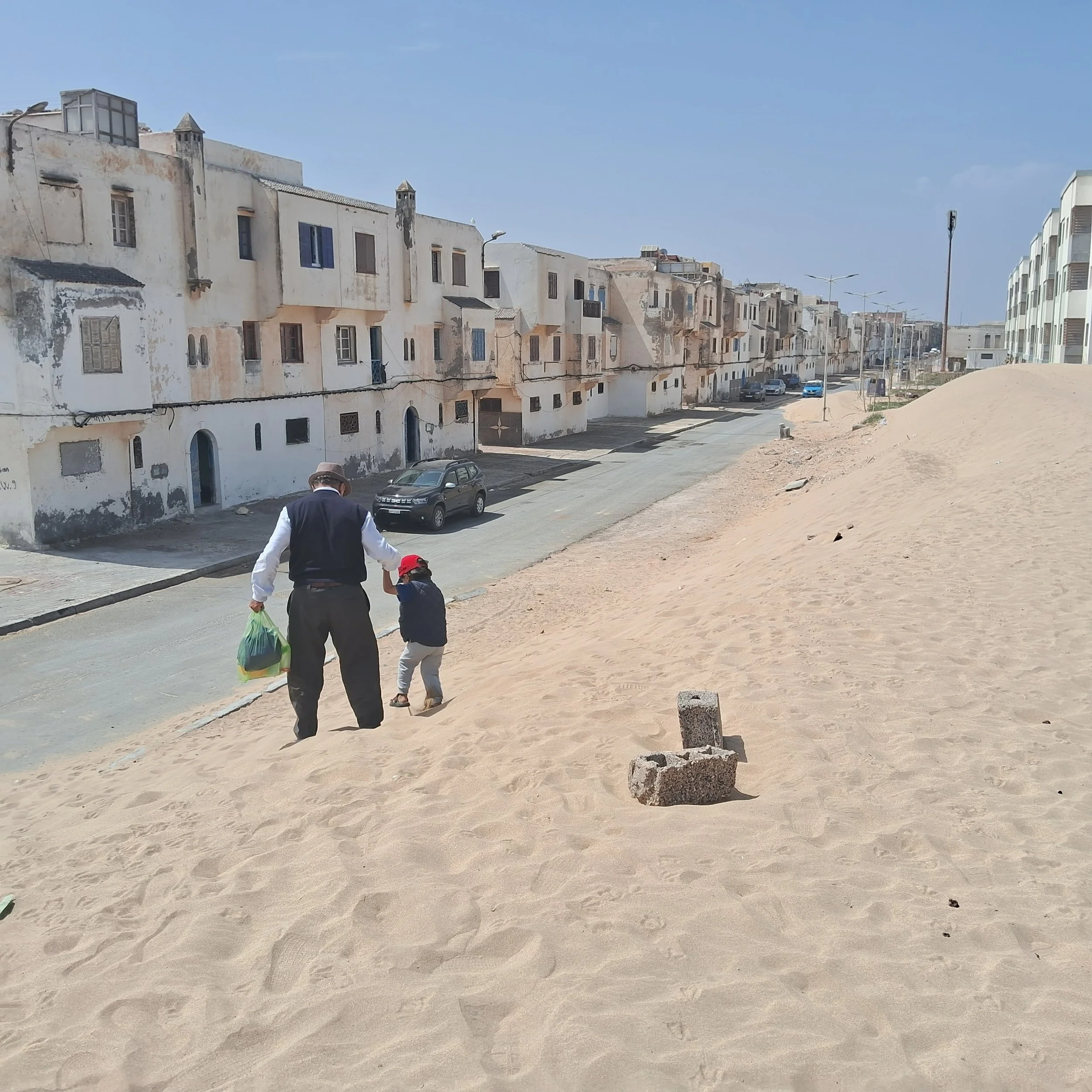
A doting grandfather guides his grandson down the dunes with a steady hand. Despite the blowing sand, dust, and rubble that threaten to swallow this fledgling outpost on the edge of the sea, love, mercy, and tenderness can be found carefully guarded and tended within the human heart. The precious inheritance passing from generation to generation.
THE REED FLUTE
Listen to the reed, how it tells a tale,
lamenting its separation.
Ever since they cut me from the reed bed,
men and women have wept at my song.
(From Rumi’s Masnavi)
The whistle of Essaouira’s winds through the narrow alleys and outcroppings of rock that encase the city echoes a world both lost yet strangely familiar. The reed at first laments having been cut from the lakebed, the holes driven through its scarred body reflect the wounds of martyrs. Yet, the damaged boat, the murdered boy, and the crumbling wall all reveal some hidden mercy, a kindness from another world in the present, ever pointing towards the divine. And, what appears to be the wound becomes, with time, a place where the light enters and where the divine music can rise and be heard by those present enough to listen.
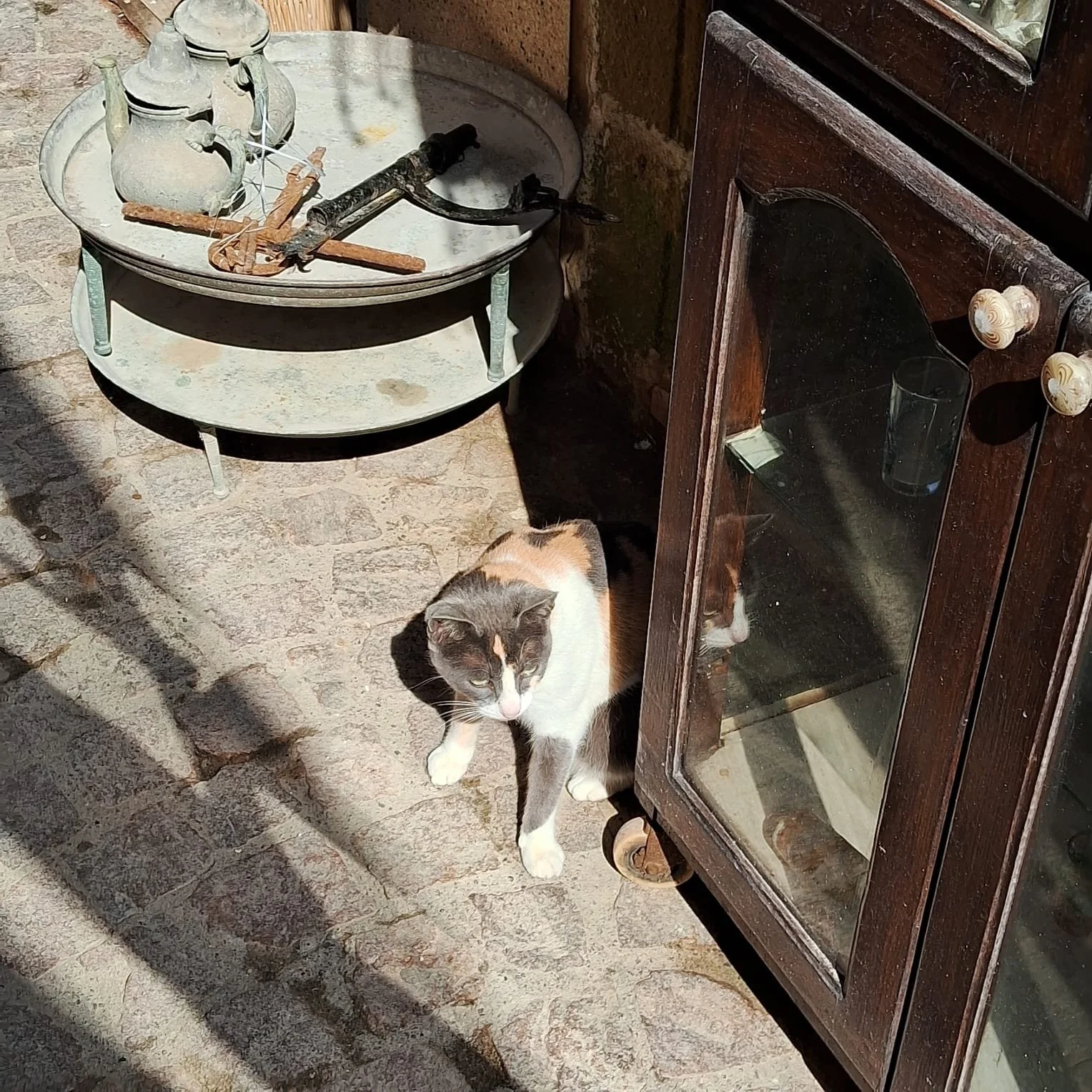
Like a cat peering into a mirror, all we see are but reflections hinting towards a deeper truth.
سَنُرِيهِمْ آيَاتِنَا فِي الْآفَاقِ وَفِي أَنفُسِهِمْ حَتَّىٰ يَتَبَيَّنَ لَهُمْ أَنَّهُ الْحَقُّ
Sanurīhim āyātinā fī al-āfāqi wa fī anfusihim ḥattā yatabayyana lahum annahu al-Ḥaqq
“We shall show them Our signs upon the horizons and within themselves until it becomes clear to them that it is the Truth.”
(Quran 41:53)