Gerart returns to Corvo Bianco: Sheathing the Szczerbiec
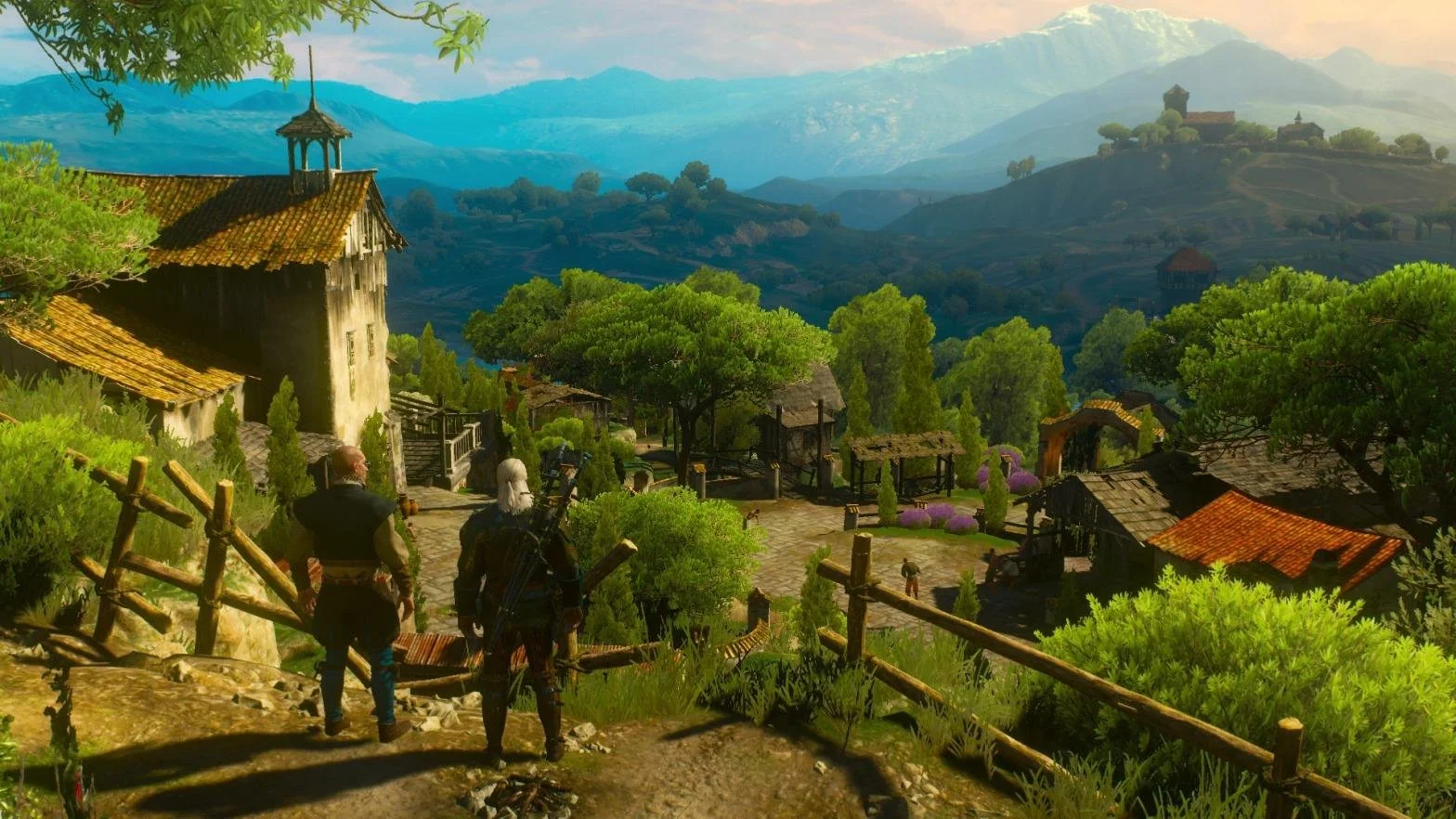
The famous monster-hunter Geralt of Rivia (right) gazes across the horizon from the grounds of Corvo Bianco, a vineyard estate gifted to him from the Dutchess of Toussaint (screenshot from the Witcher 3: Blood and Wine)
ليس الوطن فقط أرضًا نسكنها، بل سكينة تسكن فينا
laysa al-waṭan faqaṭ arḍan naskunuhā, bal sakīnatun taskunu fīnā
"The homeland is not only a land we inhabit; it is a tranquility that inhabits us."
EXILE AND RETURN
In the world of Andrzej Sapkowski’s fantasy series The Witcher (Wiedzmin), Geralt of Rivia enters a realm of shadows, moral ambiguity, and societal collapse. This is a world in which multiple kingdoms are at war, demonic creatures stalk the land, and where often the most moral choice is simply to choose the lesser evil. Sapkowski’s series of novels, which were later adapted into the remarkable video game The Witcher 3: Wild Hunt, evocatively conjure the misty bogs, dense forests, and ramshackle villages reminiscent of the often war-torn and impoverished kresy, or “Eastern Borderlands,” a region now located along the Eastern border of Poland with Lithuania, Belarus, and Ukraine. In Sapkowski’s world, the unremitting conflict between the Redanians and Nilfgaardians—redolent of historical conflicts with the Teutonic Knights, Swedish invaders, so on forth—casts a gory and chaotic backdrop behind which demons, the lurking dead, and haunted spirits emerge from burrows, wallows, and abandoned ruins.
Geralt is a Witcher and the last of his kind. Having been abandoned by his mother, a sorceress, at the gates of Kaer Morhen, Geralt is subjected to a series of mutations, experiments, and brutal trainings that test his limits and transform the unwanted child into a mutant, something not entirely human. While the modifications Geralt undergoes are designed to increase his reflexes, strength, tolerance to pain and immunity to disease, and leave him with powerful extrasensory perception, most of the youth subjected to the requisite series of trials end up succumbing to the abject cruelty of the process. Though Geralt survives and, indeed, thrives after the procedure, his distinctive white hair and piercing, luminescent eyes strike fear into villagers and townsfolk leaving the hero perpetually an outcast. Therefore, Geralt is a liminal figure, perpetually on the move aiming to secure his next contract.
While Geralt is often referred to as a “monster-killer,” or even more pejoratively (as a “contract killer,” “assassin,” “mutant freak” and so on), very few of his missions are morally clean-cut and simple. Indeed, strapped to his back are two swords—one famously used to slay monsters and the other, for humans—both of which hint at the role of discernment (literally meaning the act of “cutting away”) necessary to distinguish between friend and foe. And, in a world of corrupt barons, complicit officials, and wrathful kings, it is often the humans that turn out to be far more monstrous than any creature dwelling in a cave or bog. And while Geralt does not fight or take sides in human wars, he is often hired out and commissioned by those seeking to manipulate him and his abilities for their own ends.
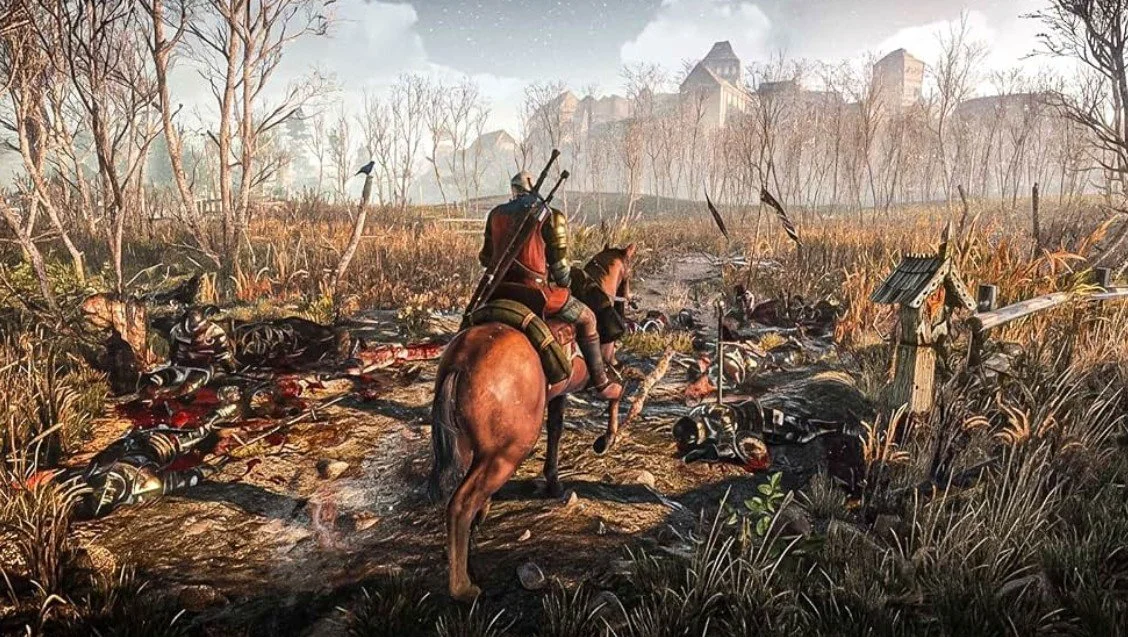
Geralt rides his steed Roach through the murky wastes of a blood-soaked battlefield in Velen. Amid abandoned villages and roads choked with starving children and refugees, the unburied ghosts of the pasts return to haunt the land. From dank bogs, crumbling hilltop ruins, and dark caverns, cursed spirits and humans alike threaten to infest the land with corruption. Wading through the morass of ruin, Geralt must discern between friend and foe, the lines of which often blur in the foggy mists. When investigating mysterious disappearances or murders, Geralt finds himself having to put right the effects of some evil inflicted on the innocent. Often, what first appears to warrant a violent response upon later reflection calls for restraint, compassion, and magnanimity. It is in these situations that Geralt’s ability to speak to the dead and wounded leads to greater wisdom.
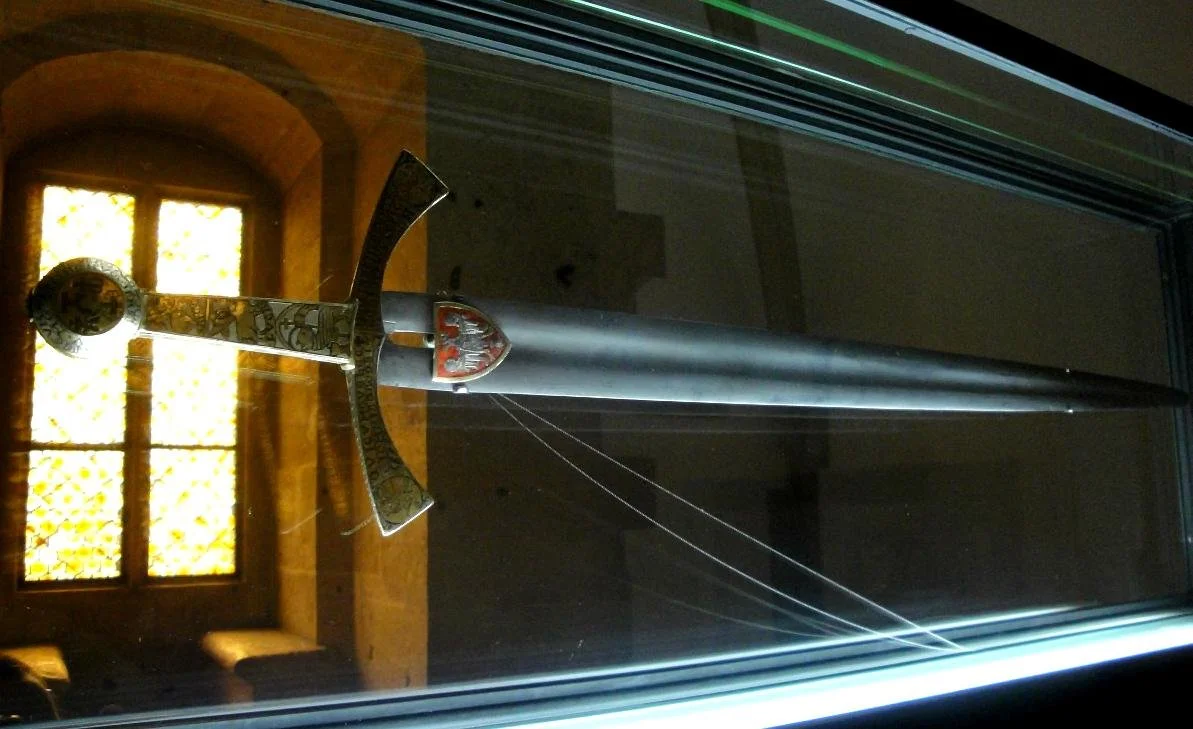
Deeply engrained in Polish mythology, the Szczerbiec (literally, “the notched sword,” or “jagged sword”) is a blade which, according to legend, was used by King Boleslaw the Brave during the 11th century to “knock upon” the Gates of Kiev during the succession crisis of those lands. While the royal coronation sword on display at the Wawel Castle in Krakow dates from a century or two later, the blade represents legitimate kingship, judgment, and sovereignty. The Szczerbiec is therefore a symbol of the trials (symbolized by the notched and marred blade) of diligence and sacrifice the warrior must undergo in service of homeland. And, while the weapon does reflect the role of warfare in maintaining kingdom and empire, it also reflects a deeper significance as a measure of authority, order, and balanced action.
Amid Geralt’s exilic wanderings following the departure from Kaer Morhen, the hero finds himself unexpectedly graced by deeply human moments. His romance with the sorceress Yennifer, comedic banter with the jaunty bard Dandelion, and father-son relationship with his wise mentor Vesemir, reflect a profound yearning for home, for love, and for peace. Geralt’s protective guardianship over Ciri—his adoptive daughter and concomitantly, the most hunted person on the continent—offers poignantly redemptive moments as the outcast and monster-slayer eases into sacrifice, care, and presence in the protection of family.
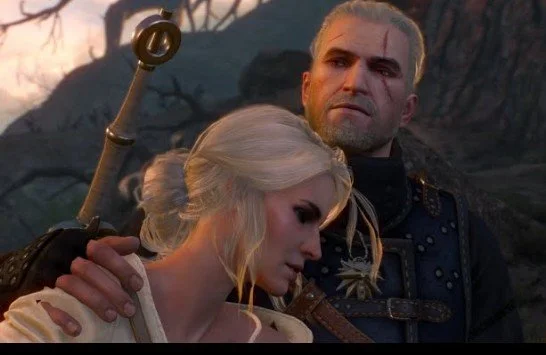
Geralt’s relationship with his adopted daughter Ciri reflects the Quranic concept of Amanah, or “trust,” that is of something sacred entrusted to one’s care. And, while Geralt cannot protect Ciri indefinitely, he can provide mentorship, training, presence, and affection as she grows to be more confident and self-assured in her abilities.
It is Geralt’s gradual transformation from an outcast to a trusted father-figure, mentor, and friend that lies at the heart of the return to Corvo Bianco, in the Kingdom of Toussaint. Having protected Ciri from the unrelenting pursuit of otherworldly forces, Geralt finds himself holding the keys and deed to a vineyard and manor nestled amid the sun-drenched, bucolic hills of a noble, southern kingdom. And it is precisely this homecoming that awakens a profound question in the soul of every warrior in exile: namely, when is it time to sheath the sword and to start cultivating a garden?
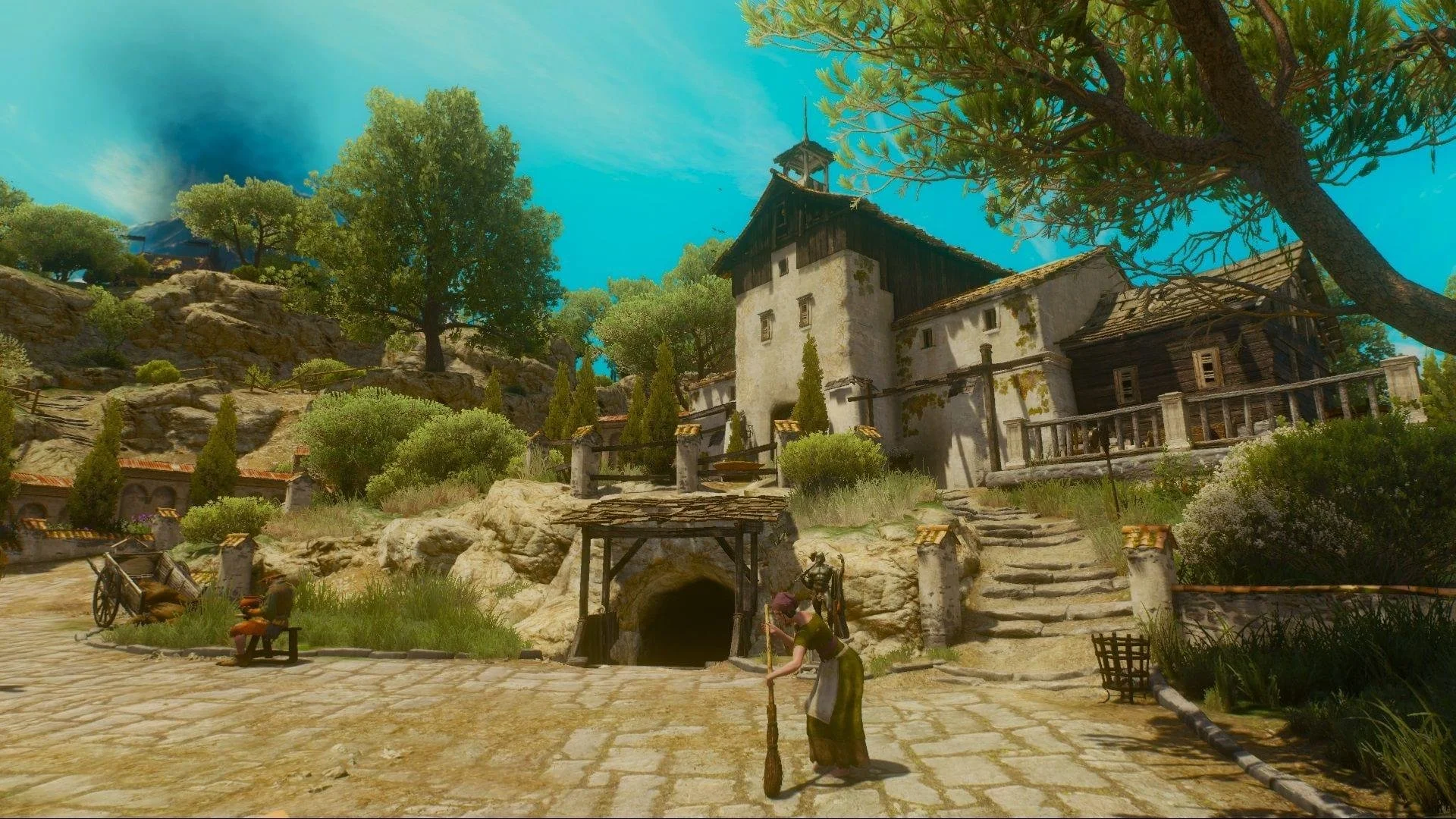
Creaking and weather-beaten, Corvo Bianco humbly bears the scars of a checkered past and bids the weary traveler rest from the journey. For the discerning warrior must choose when the time has come to put down one’s arms and to abide in adab (hospitality, courtesy, refinement) and sakinah (tranquility, repose, stillness). While the sword hanging upon the mantle is always available, sheltering one’s inheritance and caring for one’s own is more often an act of presence, care, and breaking bread with family and friends.
MY GRANDMOTHER’S HANDS
“Do kraju tego, gdzie kruszynę chleba
Podnoszą z ziemi przez uszanowanie
Dla darów nieba,
Tęskno mi, Panie.”
For that country where a crumb of bread
Is lifted from the ground out of reverence
For the gifts of Heaven...
I long, O Lord...“Moja piosnka” — “My Song,” also known as “Do kraju tego…” (Cyprian Norwid)
The concept of exile (ghurba) plays a deep and symbolic role in Polish mythology. The very word tęsknota, or “longing,” conveys a sorrowful yearning for the lost homeland, that place where the formerly fruitful and joyous lands now bear the marks of a beast and bear witness to its dismembering, like an uprooted tree. Following the partitions of Poland, when rapacious neighbors divided and annexed the Polish lands into their expanding kingdoms, many writers and poets found themselves in exile, with some, like Cyprian Norwid, managing to capture key moments of grace and beauty: the offering of bread raised in reverence, a thankful prayer of thanksgiving, warmth and hospitality offered to guests and strangers. This feeling of yearning for a lost homeland, nurtured in exile, remains deeply imprinted in the hearts of Poles, especially those millions displaced during the brutal wars and conquests of the 20th century.
“I think of my grandmother’s hands. Bony, knotted, gnarled. I always wondered how she could eat or write with those hands. Yet, those hands carried an astonishing warmth to them. I can think to the hundreds of hand-written letters I had seen those hands scribe, the perpetual tide of the past washing into the present, and back again.”
The haunting inheritance of memory, and the weight of duty to both those living and dead, keenly motivated those first Polish exiles who landed upon the shores of North America, Britain, and elsewhere. For during those harsh in-between years, from the end of the Second World War to the collapse of communism in Eastern Europe after 1990, patriotic grandmothers continued to pray, to tell stories, and to serve pierogi and cabbage rolls at the dinner table. And, much like the famous opening lines of the Polish national hymn, the spirit of the nation is not yet lost so long as we live to remember:
Jeszcze Polska nie zginęła,
Kiedy my żyjemy.Poland has not yet perished,
So long as we are alive.Mazurek Dąbrowskiego, Polish national anthem
The suffering and uncertainty of those Polish exiles—the roughly million and a half souls cast into the wastes of Siberia following the Soviet occupation of Eastern Poland in 1939-40—could also be seen in their hands, clenching like roots beneath the frozen earth, grasping a homeland from which they had been torn. For those that survived those years in gulags, and later, upon the dusty wastes of Central Asia seeking solace in Iran and further afield, guilt, longing, and duty all played a role in the need to preserve, to safeguard, and to pass on our historical inheritance. However, years and decades of wandering, that consuming sense of duty, warped and gnarled those hands, entangled in a past that could be neither recovered, nor released.
وَٱللَّهُ يَقْبِضُ وَيَبْصُطُ وَإِلَيْهِ تُرْجَعُونَ
wa-llāhu yaqbiḍu wa-yabsuṭu wa-ilayhi turjaʿūn
“And God constricts and expands, and unto Him you shall be returned.” (Quran 2:245)
In Arabic, the term qabd denotes a kind of constriction, of the heart and of the body. The person seizes up, locked into traumas, echoes of haunting memories. In this state, the sword pommel is gripped tight. The warrior asks “have I done enough? Have I served enough?”
The term bast, in contrast, refers to an expansion of the heart and a loosening of the body. Amid golden hills, radiant with wafting sheaves of wheat that unfurl upon the hillsides like a bride’s gown, there exists in hardship ease and in the journey, the promise of paradise. The opening lines of Surat Ash-Sharh (The Expansion) describes the elevation of the heart and feeling of catharsis as the burden of hardship is lifted:
Alam nashraḥ laka ṣadrak.
Wa-waḍaʿnā ʿanka wizrak.
Alladhī anqaḍa ẓahrak.
Wa-rafaʿnā laka dhikrak.Have We not expanded for you your breast?
And removed from you your burden,
Which weighed heavily upon your back,
And raised high for you your renown?Surat Ash-Sharh (The Quran)
The verse continues to describe the movement from qabd to bast, from constriction to expansion, and finally to sakinah, “peace, contentment, and serenity,” where the exhausting and tumultuous journey meets its true home, by abiding in and dwelling with God:
Fa-inna maʿa al-ʿusri yusrā.
Inna maʿa al-ʿusri yusrā.
Fa-idhā faraghta fa-nṣab.
Wa-ilā rabbika fa-rghab.For indeed, with hardship comes ease.
Indeed, with hardship comes ease.
So when you are free, devote yourself,
And toward your Lord direct your longingSurat Ash-Sharh (The Quran)
This longing (tęsknota) echoes throughout the ojczyzna (“fatherland”) of Mickiewicz, Slowacki, and Norwid. There is something of a call, a yearning for the primordial place of dwelling with God, that reflects an original innocence, the time in the Garden. And while lands that have been lost through conquest cannot be recovered or experienced in the same way, the poetry of the Romantics hark towards truth, beauty, hospitality, and reverence as those original spiritual states lost amid the tumult and chaos of dunya (“the worldly realm”). Notice that Norwid does not conjure up foreign armies or make revanchist claims, but evokes the gentle steam of freshly-baked bread and the wild storks that make their nests at the top of pear trees lining the village road:
Do kraju tego, gdzie winą jest dużą
Popsować gniazdo na gruszy bocianie,
Bo wszystkim służą...
Tęskno mi, Panie...Do kraju tego, gdzie pierwsze ukłony
Są — jak odwieczne Chrystusa wyznanie:
„Bądź pochwalony!”
Tęskno mi, Panie...For that country where it is considered a grave wrong
To disturb a stork's nest in a pear tree,
For they serve everyone...
I long, O Lord...For that country where the first greetings
Are like the eternal profession of Christ:
“Praised be [He]!”
I long, O Lord...(Cyprian Norwid-Moja piosnka [II] (My Song [II]))
In his reminiscences of homeland, Norwid evokes the spirit of hospitality (adab) and mercy (rahma) that permeate memory, and that serve as signs (ayat) pointing towards a greater Reality, namely the Kingdom of God. And, like humanity’s lost and forgotten origin in the Garden of Paradise, Norwid sees mercy, hospitality, faithfulness as echoes of a primordial longing for origin, the state of fitrah (man’s primordial nature) before the Fall. This deep yearning for a primordial time of innocence is likewise echoed in perhaps the most famous lines of Polish romantic poetry by Adam Mickiewicz:
Litwo! Ojczyzno moja! ty jesteś jak zdrowie;
Ile cię trzeba cenić, ten tylko się dowie,
Kto cię stracił. Dziś piękność twą w całej ozdobie
Widzę i opisuję, bo tęsknię po tobie.Lithuania! My homeland! You are like health—
How precious you are, only he who has lost you can know.
Today I behold and describe your beauty in all its splendour,
For I yearn for you. (From Pan Tadeusz)The concept of exile (ghurba) plays a deep and symbolic role in Polish mythology. The very word tęsknota, or “longing,” conveys a sorrowful yearning for the lost homeland. The formerly fruitful and joyous lands now bear the marks of a beast and bear witness to its dismembering, like an uprooted tree. Adam Mickiewicz, whose heartfelt and aching zeal for homeland inspired his greatest works, wrote of the ancient marshes and birch forests of Lithuania while in exile. Meandering streams flanked with wildflowers, a low whitewashed stone wall at the edge of the manor grounds, its stately oaks and rustling alder trees whispering softly in the soft, late-afternoon light.
“Dlaczegoż stąd ucieka serce w okolice
Dalekie i — niestety! jeszcze dalsze czasy?
Litwo! piały mi wdzięczniej twe szumiące lasy…”
“Why does the heart flee from here toward distant regions—and, alas, toward times still more distant? Lithuania! Your rustling forests sang more sweetly to me…” (Adam Mickiewicz-“Pielgrzym” — “The Pilgrim,” from the Crimean Sonnets)
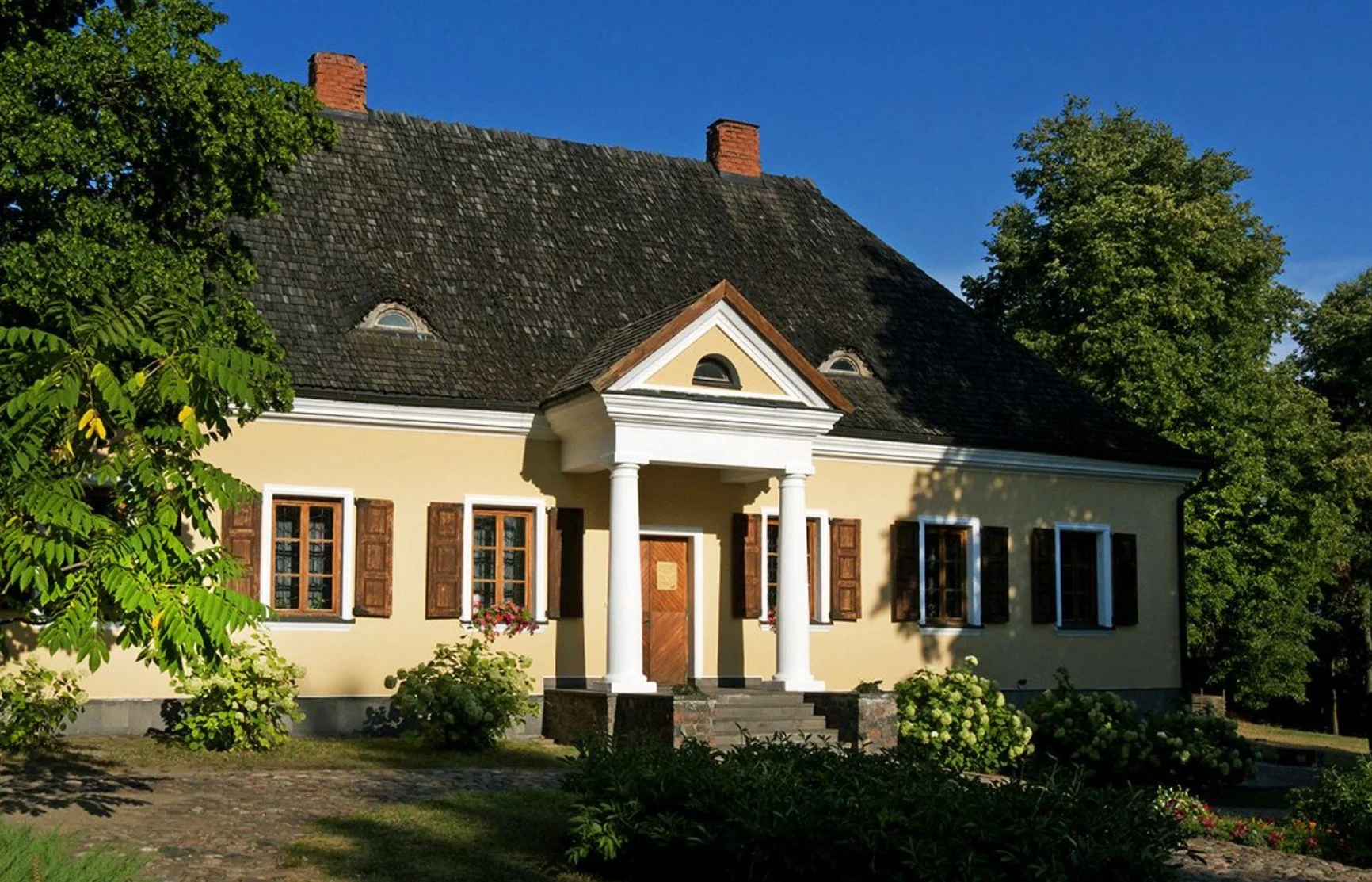
The reconstructed childhood home of Adam Mickiewicz, near Nowogródek (present-day Belarus). The simple, two-pillared portico and rustic, shingled roof reflect the quiet elegance of the classic dwór, or manor house of the Polish minor gentry.
Śród takich pól przed laty, nad brzegiem ruczaju,
Na pagórku niewielkim, we brzozowym gaju,
Stał dwór szlachecki, z drzewa, lecz podmurowany;
Świeciły się z daleka pobielane ściany...
Amid such fields, in days gone by, beside a little stream,
Upon a gentle hill, within a grove of birches,
There stood a nobleman’s manor, built of wood upon a stone foundation;
Its whitewashed walls shone brightly from afar...
(Pan Tadeusz)
The wanderings of poets and bards in the wake of the 1795 partition of Poland led to an overflowing of poetry, verses of longing for a lost yet sacred homeland. Norwid, whose works were little appreciated until after his death, wrote from Paris, and later, from New York after crossing the Atlantic. Norwid died in relative obscurity at the St. Casimir Institute, a home for impoverished Polish veterans and emigrees in 1883. Mickiewicz’s experience of exile was a bit broader, having been cast out from his homeland of Lithuania to live in the Russian Empire. After stints in Odessa, Moscow, and St. Petersberg between 1824-1829, Mickiewicz travelled through Europe before settling in Paris. Mickiewicz finally passed away in Istanbul in 1855 while working to garner support for the Polish national cause of independence from foreign rule.
Juliusz Słowacki, one of Poland’s greatest bards, travelled through Italy, Greece, Palestine, Lebanon, and Egypt, before settling in Paris. His poetry conveys a particular longing and sorrow, of one who has wandered but has not yet learned to fully rest in sakinah. The following excerpt from Hymn, echoing Norwid and the elegant, white storks of Poland’s grassy marshes, reflect the vast, seemingly unending terrain of exile that now unfolds before those cast from their homeland:
Dzisiaj, na wielkim morzu obłąkany,
Sto mil od brzegu i sto mil przed brzegiem,
Widziałem lotne w powietrzu bociany
Długim szeregiem.
Żem je znał kiedyś na polskim ugorze,
Smutno mi, Boże!
Today, wandering upon the great sea,
A hundred miles from shore and a hundred miles before another,
I saw storks flying through the air
In a long procession.
Because I once knew them upon the Polish fields,
I am sorrowful, O God!
The verses of Hymn, which read like a prayer or lamentation written at sea (the author having composed it on a steamer ship while crossing the Mediterranean back for Europe), captures the arduous travails of ceaseless passages from one land to another, never quite knowing the next destination, and always remaining somewhat a stranger. Like Geralt in Velen, the exile crawls over the graves of men, lurching forward, never sure where the laborious sojourn will deliver him:
Żem często dumał nad mogiłą ludzi,
Żem prawie nie znał rodzinnego domu,
Żem był jak pielgrzym, co się w drodze trudzi
Przy blaskach gromu,
Że nie wiem, gdzie się w mogiłę położę,
Smutno mi, Boże!
That I have often pondered over the graves of men,
That I have scarcely known a family home,
That I have been like a pilgrim labouring upon the road
Amid flashes of thunder,
That I do not know where I shall be laid in the grave—
I am sorrowful, O God!
Słowacki’s stay in Lebanon was especially poignant and meaningful, referring to the land of blooming almond trees and evergreens as “prawdziwie ziemia obiecana” (truly the promised land…). In 1837, while staying with Maronite Christian monks at the Monastery of St. Anthony in Ghazir, Słowacki penned his famous Anhelli. Biblical and prophetic in tone and scope, Anhelli describes the Golgotha faced by those exiles cast into the Siberian wastes. The meager troop is led by the Shaman, an uncannily Khidrian figure, who guides these lost souls through abandoned villages, mines, and graveyards, a frozen wasteland where the wanderers encounter suffering, degradation, factionalism, and death. As the hapless troop weaves its way through the dense, snow-covered underbrush, the Shaman suddenly cries:
Oto są kopalnie Sybiru!
Stąpaj tu ostrożnie, bo ta ziemia brukowana jest ludźmi śpiącymi.
“Behold the mines of Siberia! Tread carefully here, for this earth is paved with sleeping men.”
Those wandering in exile find themselves quite literally treading upon the graves of previous unfortunates who had met their final rest in a distant, accursed land. In a later scene, the main protagonist Anhelli, whose strange and rather otherworldly name suggests an angelic-type figure of primordial innocence (fitrah), approaches a cemetery and hears, beneath the boggy layers of soil, murmurs, groans, and curses, what Słowacki describes as “a hymn of complaining graves” (hymn skarżących się mogił). Then, amid Anhelli’s Dantesque descent as an observer and witness of Poland’s tragedy, an angel moves its wings three times, quieting the graves and bringing peace to the dead.
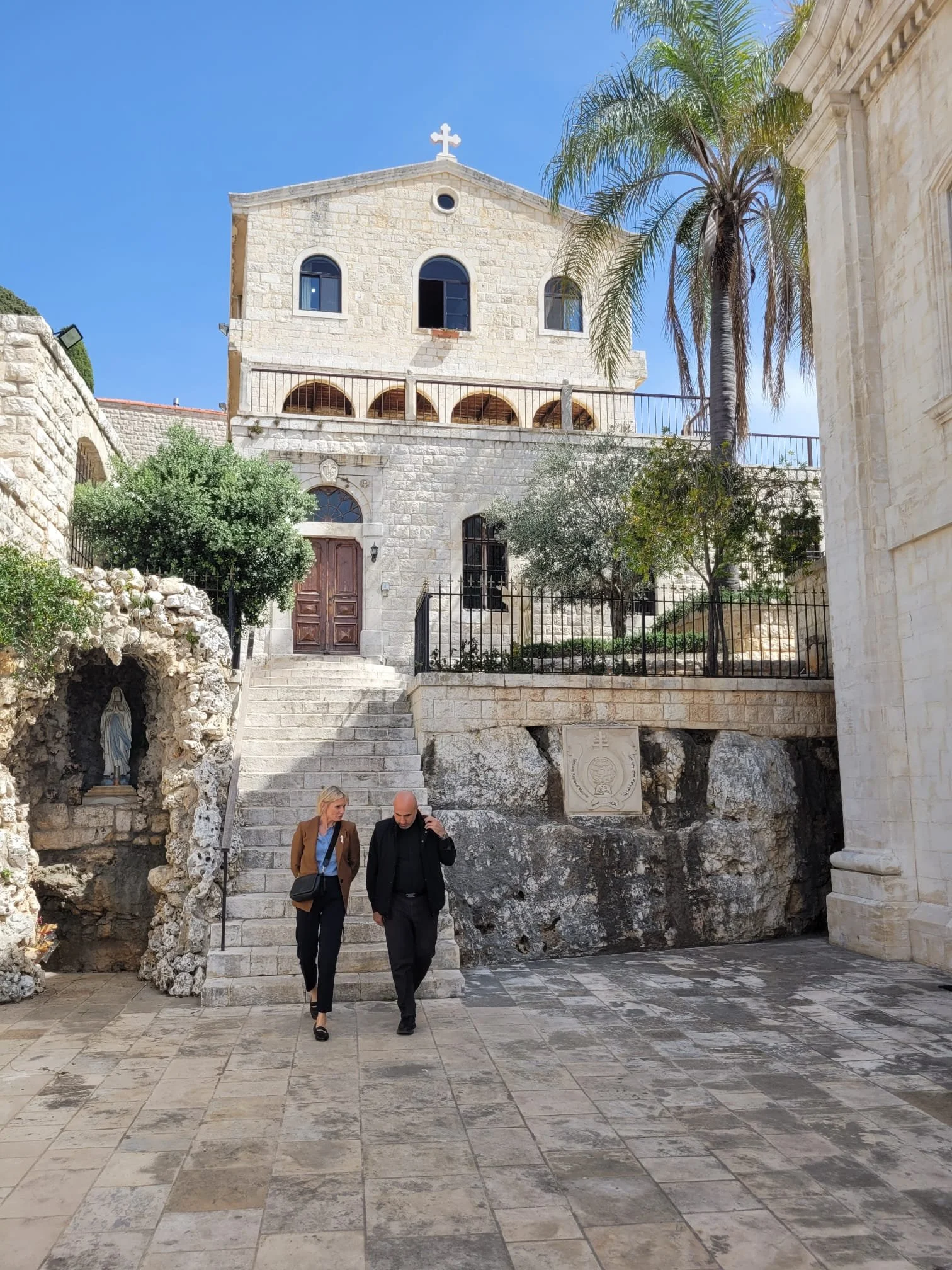
Polish visitors at the Monastery of St. Anthony at Ghazir, Lebanon, the site where Słowacki had written Anhelli amid his time of exile in the Middle East (from February 20 to April 1, 1837-a period of roughly 45 days). The site now contains a small exhibition and museum detailing the poet’s stay at the monastery, the garden of peace from which the poet’s deepest reflections on exile had sprung.
Visit to Ghazir - Poland in Lebanon - Gov.pl website
Słowacki’s sojourn at the monastery at Ghazir left an indelible mark on him. And, although the poet and wanderer continued to suffer the burden of his nation’s crucifixion and dismemberment, he nevertheless faithfully continued to bear the cross into an interminable exile. Yet, those Polish exiles who had trudged through the icy wastes of Siberia and had tasted bitterness in strange lands amid deafened and uncomprehending faces, were able to find rest in faith and community. This was the case especially for those millions of Poles displaced following the joint Nazi and Soviet invasion and dismemberment of the Second Polish Republic in September 1939.
After the caprices of war had changed and German forces invaded the Soviet Union, many Poles were released from the Soviet gulags and permitted to venture south, to Iran and towards British Allied forces organizing new war fronts. While many men joined outfits to bring the war to Italy and Germany (the Anders Army being the most notable), women, children, and the wounded were shuttled to British colonies in East Africa and South Asia. Eventually, my grandmother, and mother and siblings (who were sent to a refugee camp near Masindi, Uganda), boarded ships bound for North America, settling in the Canadian province of Alberta. And, while these Polish immigrants found themselves in a new land of promise and opportunity, my grandmother and those who shared her journey continued to carry something of the sunny fields and lakes of Mickiewicz’s Lithuania, as well as the dense thickets and icy tracts of the Siberian exodus.
ABIDING IN THE GARDEN
“Come to me, all you that labour, and are burdened, and I will refresh you.
Take up my yoke upon you, and learn of me, because I am meek, and humble of heart: and you shall find rest to your souls.
For my yoke is sweet and my burden light.”
— Matthew 11:28–30, Douay-Rheims
Yā ayyatuhā al-nafsu al-muṭmaʾinnah.
Irjiʿī ilā rabbiki rāḍiyatan marḍiyyah.
Fa-dkhulī fī ʿibādī.
Wa-dkhulī jannatī.
O tranquil soul,
Return to your Lord, content and well-pleasing.
Enter among My servants,
And enter My Garden.
-Quran (Surat Al-Fajr)
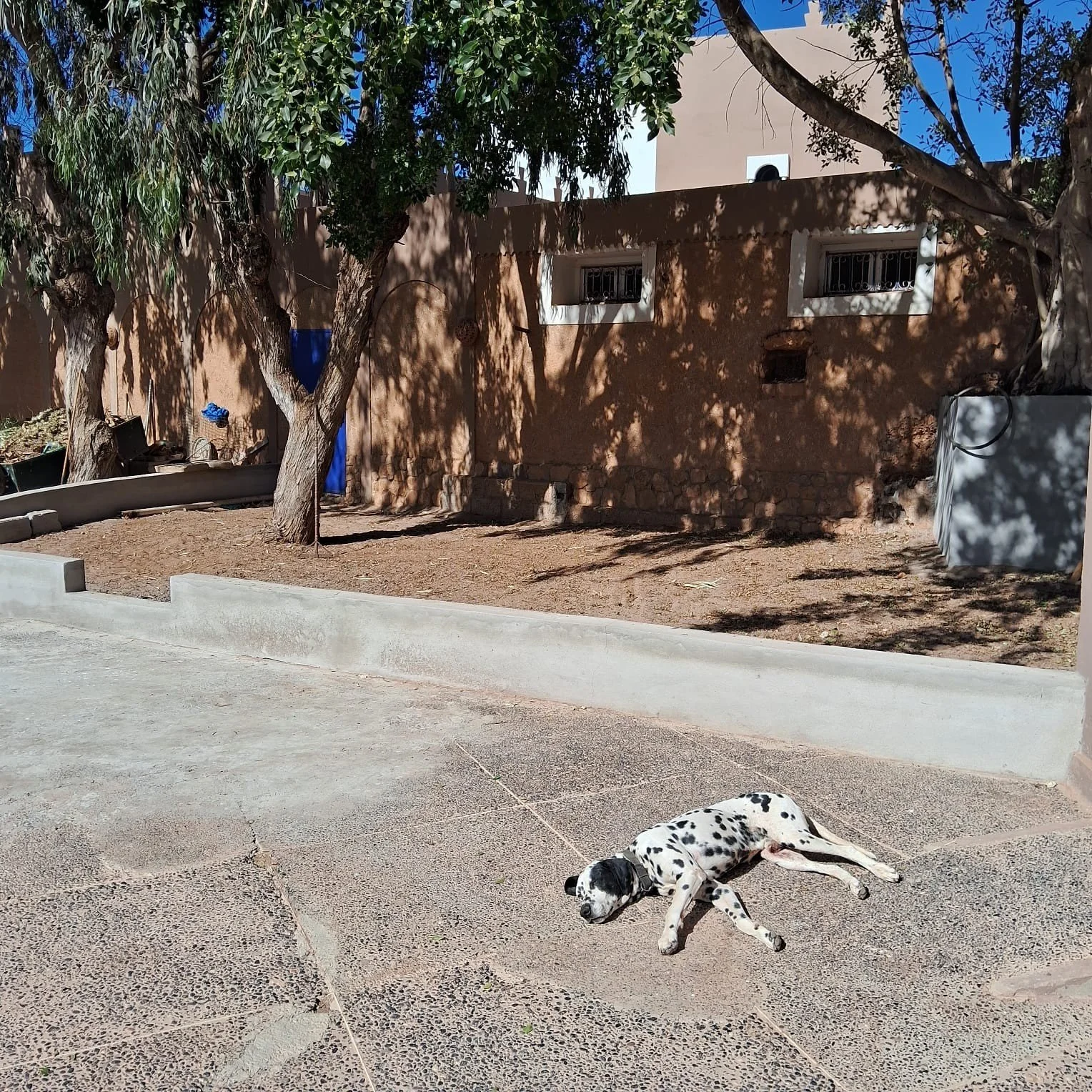
A dog sleeps peacefully in the sun on pavement of a Moroccan garden (Ksar des Etoiles, Mirleft)
"The end of all our exploring will be to arrive where we started and know the place for the first time."
T.S. Eliot
The imagery of the garden is a central feature of religious imagery. Following the original exile of man from the Garden of Eden, God offers a promise of return to that idyllic state of paradise:
“The Lord therefore will comfort Sion, and will comfort all the ruins thereof: and he will make her desert as a place of pleasure, and her wilderness as the garden of the Lord.”
— Isaiah 51:3
The transmission of God’s message through numerous prophets (in Arabic, an-nabi) carries on through the old Jewish texts through to the New Testament, and finally, reaching a culmination in the Quran, where the image of the garden is especially powerful. In Titus Burckhardt’s Fes: City of Islam, the author delves deep into the crumbling plazas and ruined alleyways of that ancient and illustrious city of learning and wisdom. In it, he compares the peace and seclusion of the classical Moroccan garden with that of medieval monastic cloisters, whose pillared ambulatories wrap around a central square shaded by a cooling canopy of flowering trees and nourished by the steady bubbling of a stone fountain.
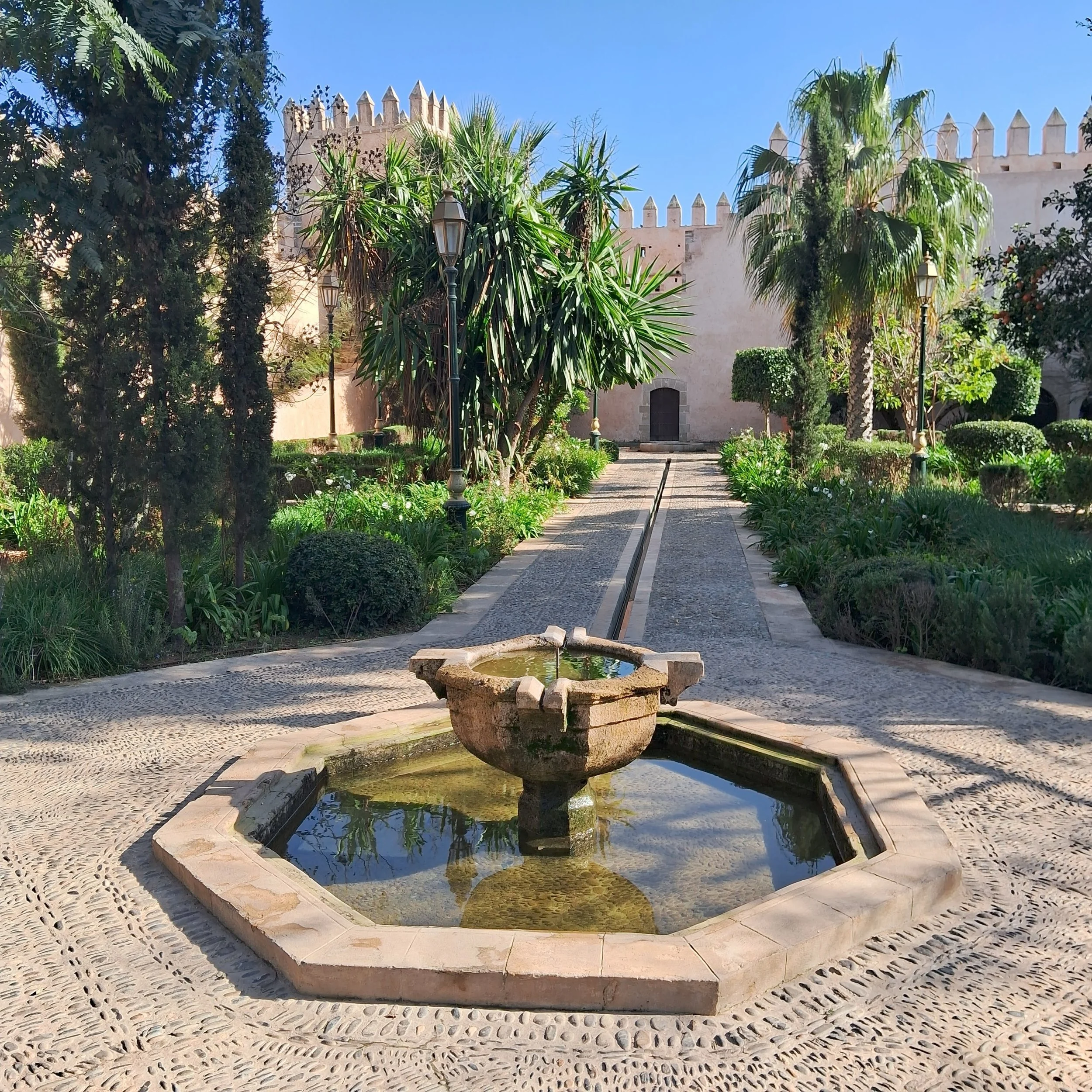
Located within the thick, buttressed walls of Rabat’s Kasbah of the Oudayas, the Andalusian Gardens represent in symbolic terms the abiding destination of the faithful. While the imposing walls of the Kasbah itself tower perilously atop the Bou Regreg river—a representation of law, order, and regal authority—the inner sanctum of the garden bids visiting wanderers peace and respite, amid meandering lanes that invite contemplation. The garden therefore becomes a discerning symbol separating the world of ‘dunya’ (the ‘outside’ world of ego and striving) with the ‘inner’ world of ‘din’ (faith and abiding in God)
Burckhardt describes the profound contrast between the chaos of the street—a ceaseless procession of merchants, craftsmen, and soldiers, a world smothered in the din of argument, negotiation, and exertion—with the self-reflective and meditative environment of the courtyard, that invites deeper introspection and that draws the gaze—through the frame of the courtyard’s steep walls—towards the heavenly realms. Blossoming pear and apple trees and the nearby hum and bustle of kitchens secluded beneath shady porticos provide a burgeoning promise of hospitality, ‘adab’, and ‘rahma’ amid the tranquil air of calm.
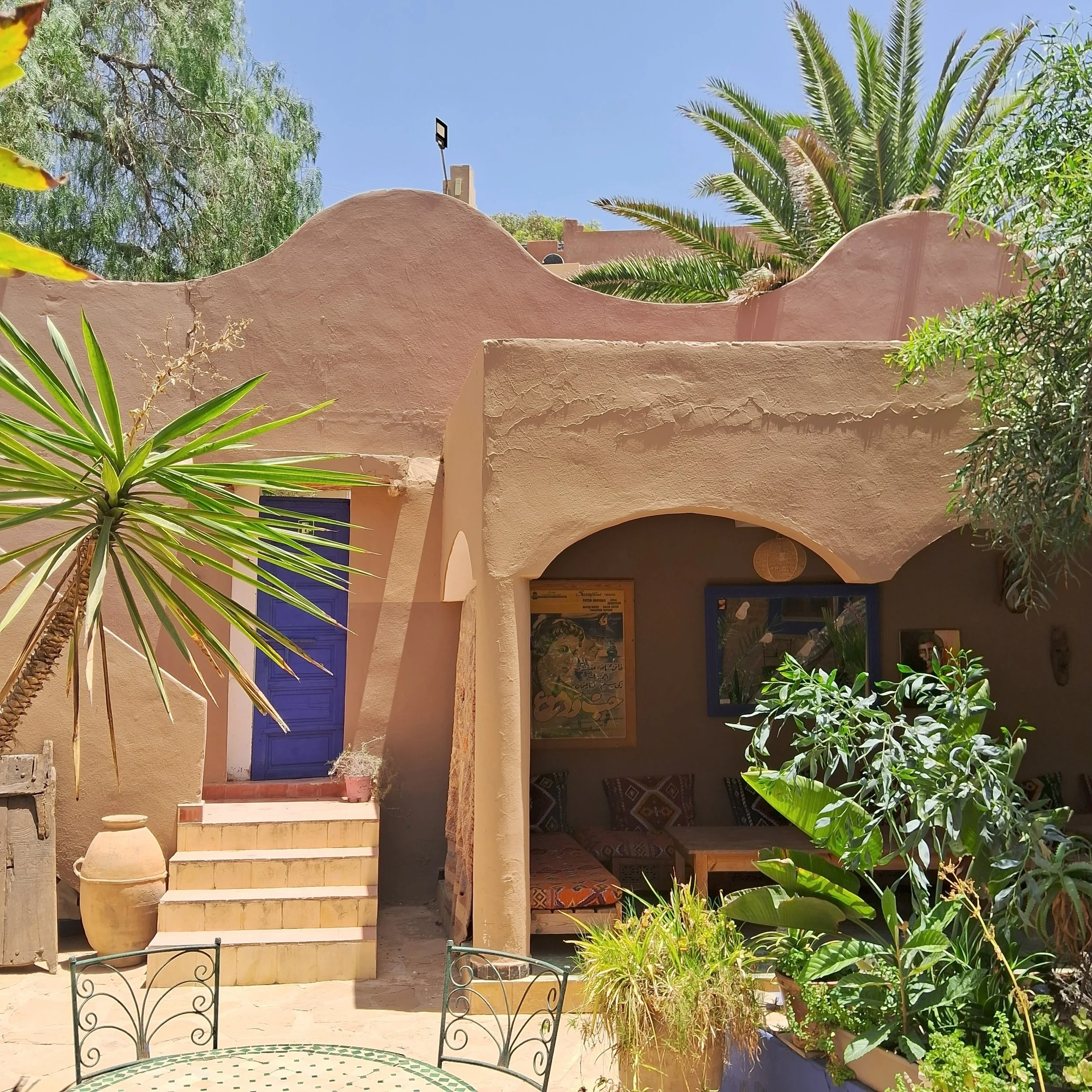
The classical Arabian arch, like the courtyard at the center of all riad gardens, transforms the space itself into part of the architecture. The gaze naturally ascends and then rests in that space, a vastness that allows the soul to dwell, contemplate and discern (Courtyard of Chez Hassan, Imsouane)
Finally, the narrow passages between porticos with its sharp corners and winding stairwells, of adobe and plaster, beckon the visitor towards initiation and mystery in what has been described in Arabic as ‘wa’ad al-wusul’, “the promise of arrival.” Like medieval monks traversing a cloistered labyrinth in hallowed procession to its center, the guest of the riad is forever invited to delve further into oneself. Meanwhile, family and warm company enliven and bring a joyous feeling of arrival towards something mirroring the original garden of paradise.
SHEATHING THE SZCZERBIEC
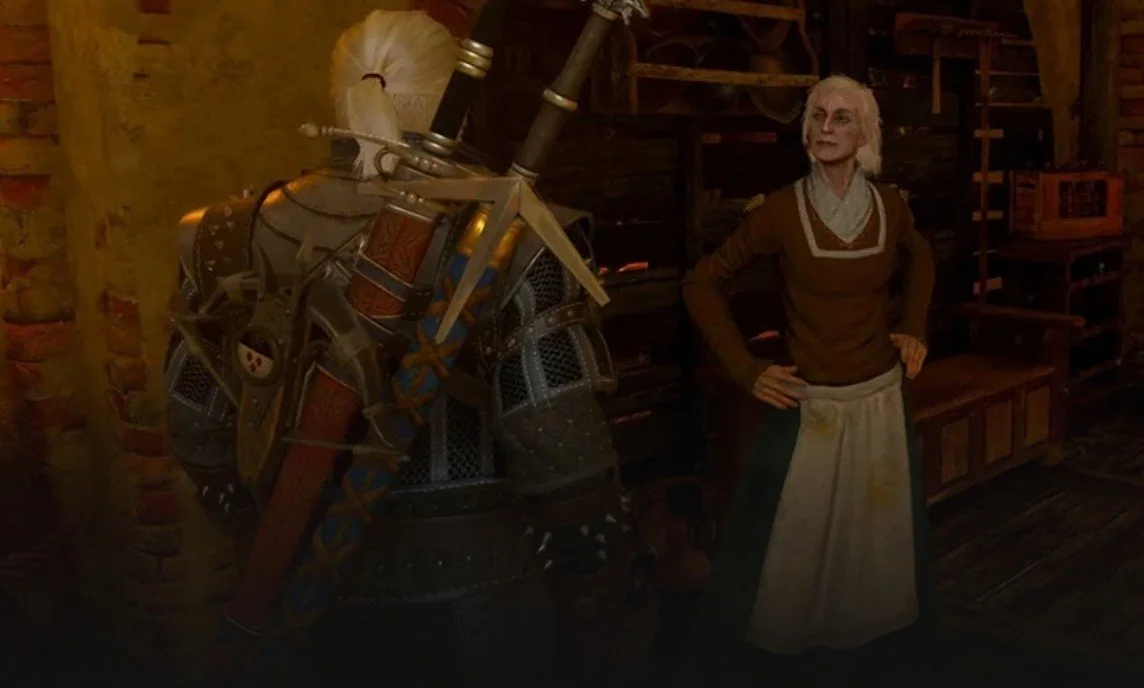
Geralt welcomes Marlene de Trastamara to Corvo Bianco, an aged noblewoman whom he had freed from a wight’s curse. Long before, amid the revelry of one of her lavish feasts, Marlene had contemptuously turned away a beggar who came to her threshold asking for food. Her violation of that ancient law of hospitality brought a terrible punishment: transformed into a hideous wight, she wandered the ruined halls of her ancestral home for years, tormented by an insatiable hunger and surrounded by mountains of spoons, vainly seeking an answer to the riddle pronounced by her mysterious visitor:
“None shall sit and dine with you at your table; no spoon you have shall sate you…”
Upon encountering the cursed woman in the decayed ruins of her manor, Geralt carefully sheathes his weapon into its scabbard and sits at a table, beckoning the wight to sit and eat, without spoons. As Marlene begins to see her face in the reflection of the empty soup bowl, the curse is broken. Again, it is through discernment, patience, and trust that Geralt is able to help the unfortunate soul regain a sense of humanity and belonging. Hospitality and mercy, as it turns out, leads to the fulfillment of the Witcher’s vocation. Geralt invites the now elderly Marlene to tend the kitchen at Corvo Bianco, where the table is set and things placed in right order for future guests and wanderers.
CONCLUSION
Geralt’s homecoming from exile does not necessarily entail an end to the adventure. There will continue to be quests available, with the sheathed weapon mounted and waiting on the high wall. Regardless, the most difficult part of the journey may indeed be the return. Geralt had left the familiar world of his upbringing and wandered through the wastes and ruins of war-torn Velen to find himself having to tend a garden and run a home. And now, the question is not how much more one can push, and strive, and subject oneself to hardship in fulfilling another mission, but rather how one can care for and protect that which is entrusted to him? This reflects the idea of amanah, or “trust,” the idea that we are uniquely responsible for those in our charge and care. Within the protective circle of this amanah is faith, memory, and homeland, as well as family and those entrusted to us. My grandmother had also wandered, and her husband fought in the war. And when they had arrived and built a home, they did not feel condemned to constantly relive the wounds of the past in bitterness and anger. Rather, they built a garden and set a table for guests. The culmination of a life of wandering finally at peace, a warm table surrounded by family, my grandmother serving another cabbage roll.
"Verily, in the remembrance of God do hearts find rest."
(Quran 13:28)